Buying Guides
Why Do Some Projects Choose Square LCD Screens Over Standard Monitors? Four Decision Points and One Prevalent Misconception
Standard 16:9 commercial monitors are readily available, transparently priced, and stocked in volume worldwide. Yet across retail environments, architectural exhibition galleries,
Standard 16:9 commercial monitors are readily available, transparently priced, and stocked in volume worldwide. Yet across retail environments, architectural exhibition galleries, and self-service kiosks, project managers frequently bypass standard monitors specifically to source specialized square LCD screens.
This preference is driven by practical operational alignment rather than a desire for novelty. Below are four objective decision criteria to determine when a square display is the optimal choice, followed by clarification of a common procurement misconception.
Clarifying a Misconception: Square Displays Are Not Always 1:1 Equilateral
The industry term 'square display' is used broadly. In most commercial contexts, it describes screens whose aspect ratio approaches a square (such as 4:3, 5:4, 8:9, or true 1:1), rather than strictly equilateral dimensions. Specifications vary across panel foundries, with select manufacturers offering custom aspect ratio engineering.
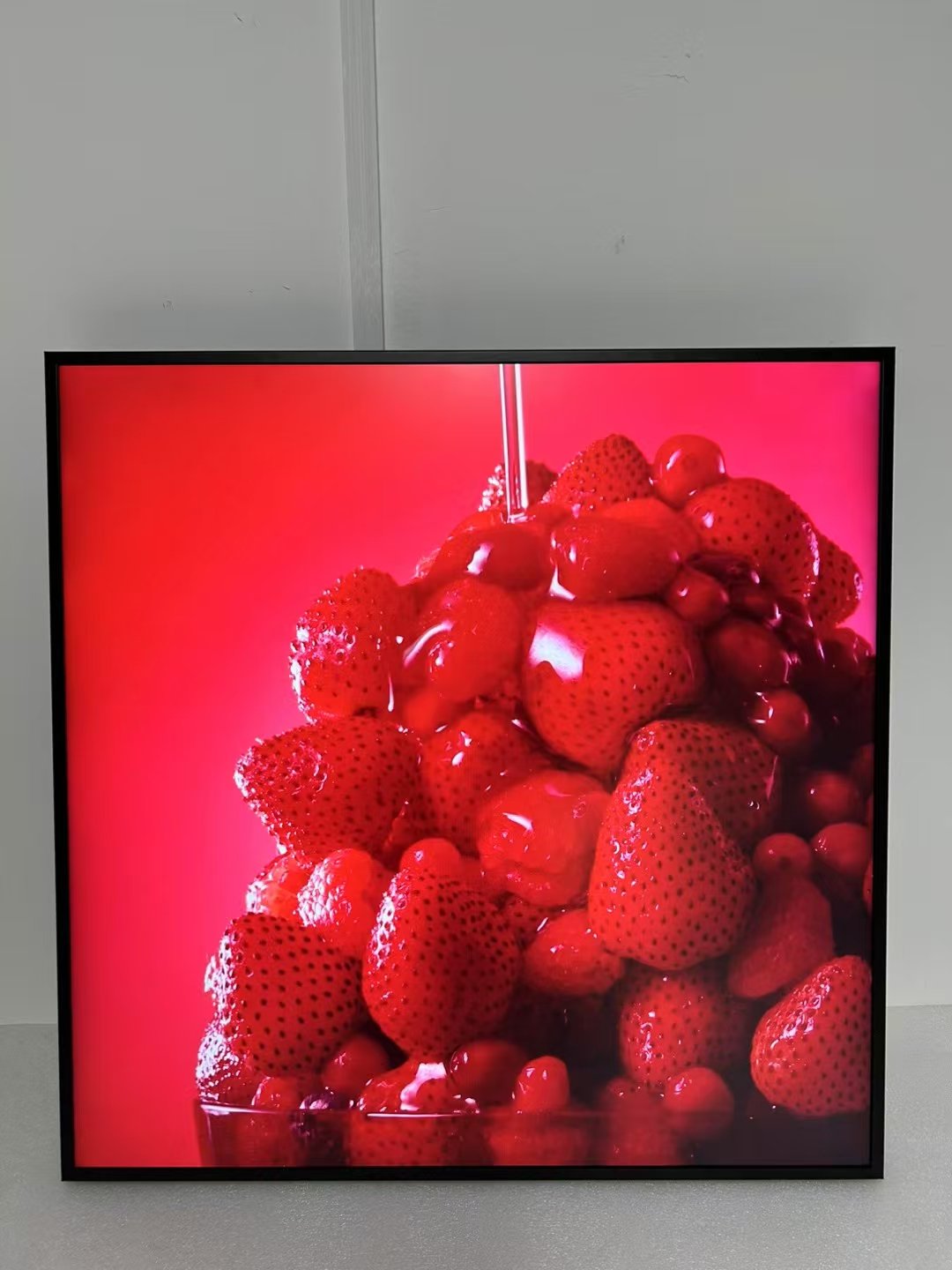
When specifying hardware, look beyond generic labels and examine exact aspect ratios and active dimensions. For example, the 33.3-inch square display featured on our website specifies standard and customized aspect ratios, with exact proportions detailed on the product datasheet.
Decision Point 1: What Aspect Ratio Does Your Content Use?
This represents the foremost operational determinant.
If media assets consist primarily of standard horizontal 16:9 video footage or widescreen corporate reels, conventional widescreen monitors remain the natural choice. However, if content comprises vertical poster-style artwork, digital menus, information directories, financial data tables, or specialized kiosk user interfaces, these assets conform far more naturally to square proportions. Displaying them on widescreen 16:9 monitors creates awkward compromises: either wide black pillarbox bars on the sides, or stretched, distorted visuals.
Herein lies the core value of square displays: creative content matches the display aspect ratio perfectly, filling the canvas completely without wasting screen real estate or requiring awkward cropping.
Decision Point 2: Is the Physical Installation Space Square-Shaped?
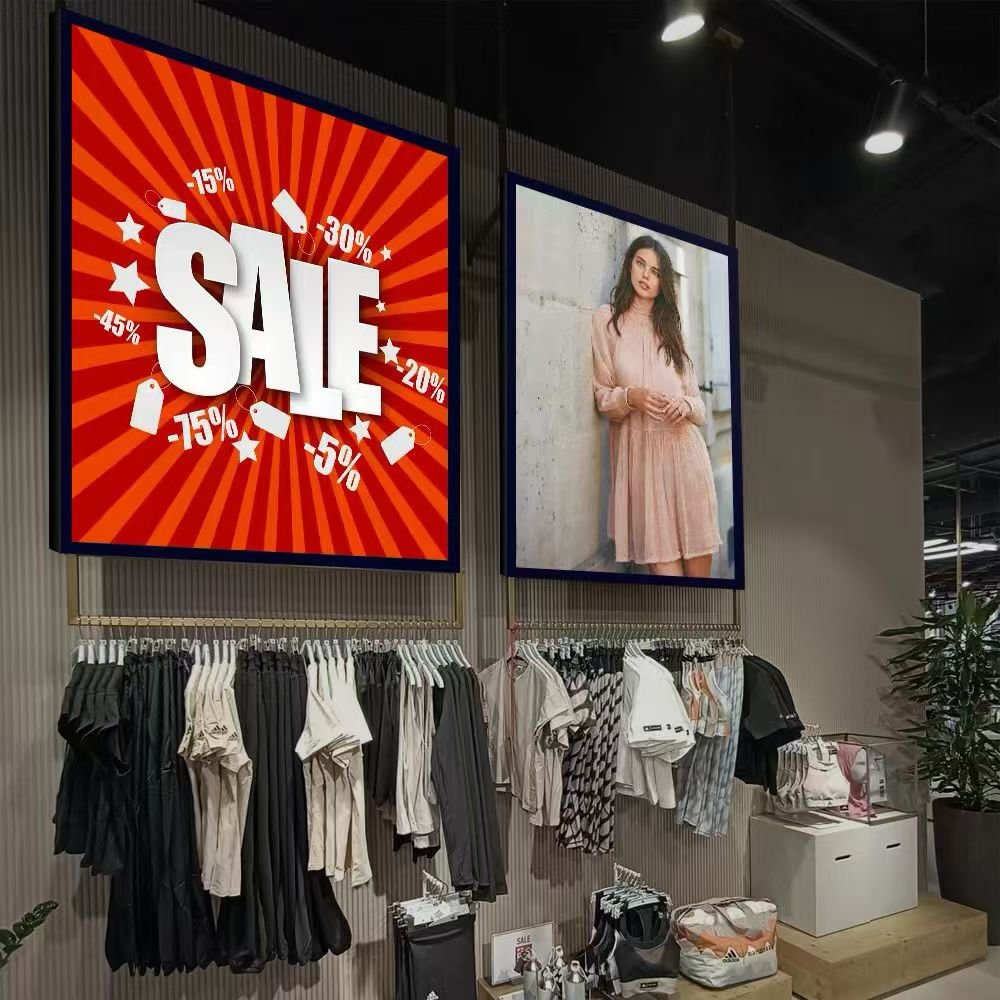
Many prime commercial surfaces are not widescreen rectangles: endcap panels on retail gondolas, vertical architectural pillars, front bezels on self-service kiosks, or square niches recessed into branded feature walls.
Installing a standard 16:9 monitor into these spaces either leaves empty, awkward margins, forces the display to be downsized excessively, or fails to fit entirely. Square displays fill the available spatial envelope cleanly, delivering a symmetrical, polished architectural appearance. When mounting into fixed millwork or equipment cutouts, measure dimensions first, then select matching aspect ratios.
Decision Point 3: Does the Application Require Continuous 24/7 Duty and Embedded Integration?
Standard consumer monitors are engineered for home and office desktops operating several hours a day. Commercial deployments frequently run 24/7 continuously, often embedded flush inside millwork cabinetry, architectural walls, or automated kiosks where thermal conditions differ fundamentally from desktop environments.
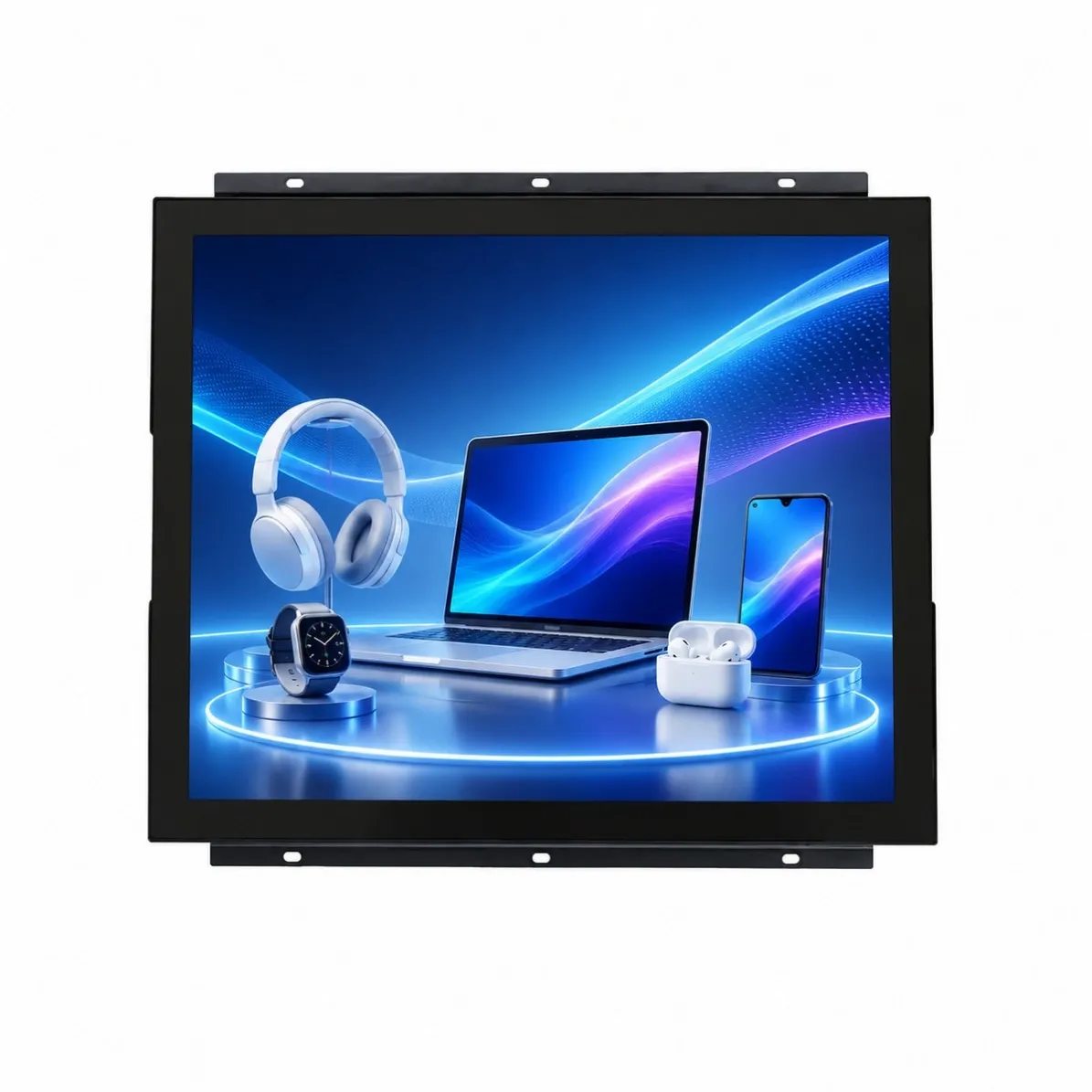
Commercial-grade square displays are engineered specifically for this operational profile, offering Open Frame and Embedded mounting configurations that integrate cleanly into custom enclosures. Our square displays are certified commercial-grade, supporting continuous 24/7 duty cycles according to model specifications.
During procurement, clarify: What is the rated daily duty cycle? How is thermal heat dissipation managed? What is the warranty SLA? Never enclose consumer desktop monitors inside tight commercial cabinetry, as overheating will cause premature hardware failure.
Decision Point 4: Do You Require an Integrated All-in-One 'Screen Plus OS' Solution?
Standard monitors function purely as passive display receivers, requiring external PC players or media boxes. Commercial square displays frequently integrate onboard compute engines (Android or Windows OPS), equipped with HDMI, Ethernet LAN, and Wi-Fi to run digital signage CMS software natively for scheduled media playback and remote updates.
For estates operating multiple displays across diverse locations, integrated compute engines eliminate external media boxes, cable clutter, and field maintenance headaches. For instance, the 33.3-inch square display on our website supports Android/Windows, HDMI, LAN, Wi-Fi, and integrated CMS, with optional interactive touch overlays.
Conversely, if your deployment operates a single standalone display driven directly by an adjacent dedicated computer, integrated compute engines add little value, and paying for redundant features is unnecessary.
Transparently Understanding Costs and Limitations of Square Screens
Unit Pricing Is Typically Higher: Specialized aspect ratios, commercial-grade electronics, integrated compute engines, and smaller production runs distribute fixed costs across lower volumes, making per-unit prices higher than mass-produced consumer monitors. Comparing quotes requires evaluating integrated compute, commercial duty ratings, and warranty coverage alongside the raw panel.
Catalog Variety Is More Focused: Off-the-shelf sizes and accessories are less abundant than mass-market monitors, often requiring custom production scheduling.
Not Suited for Standard Widescreen Media: Horizontal 16:9 video content belongs on widescreen monitors; never force square displays into widescreen roles purely for novelty.
Media Must Be Formatted to Native Aspect Ratios: Creative assets must be authored directly to the screen's native pixel resolution; playing unformatted widescreen media results in letterboxing or distortion.
Self-Assessment Framework: Should You Choose a Square Display?
Review these diagnostic criteria:
Is content formatted as posters, vertical menus, or square UI layouts? Is the physical installation opening square or recessed? Does the operation require 24/7 continuous duty? Is integrated onboard computing and remote CMS management desired?
If the majority of answers are 'yes,' a square display provides compelling commercial value. If mostly 'no,' standard widescreen monitors are more cost-effective. For borderline cases, deploy pilot units in one or two test locations before deciding on fleetwide rollouts.
Frequently Asked Questions (FAQ)
Do square displays deliver better image quality than standard monitors?
Picture quality depends on panel grade and optical tuning rather than geometry. The advantage of square displays lies in aspect ratio alignment and commercial-grade engineering rather than raw image quality alone.
Can square displays connect to external computers as standard monitors?
Yes, via standard HDMI, DisplayPort, or VGA inputs, provided resolution timings match.
Can square displays be custom-engineered to specific dimensions?
Yes. ZXTLCD supports comprehensive OEM/ODM custom engineering, evaluating custom ratios against available glass substrates based on site specifications.
Are commercial square displays suitable for outdoor environments?
Most commercial square displays are designed for indoor commercial spaces; outdoor deployments require specialized all-weather enclosures and high brightness, verified prior to ordering.
Conclusion
Choosing a square display is not about being 'different,' but about aligning hardware geometry with content format, architectural contours, and continuous commercial duty cycles. Evaluating content aspect ratios, mounting dimensions, duty cycles, and compute needs ensures you invest wisely.
ZXTLCD specializes in the design and manufacturing of shelf-edge stretched bar displays and specialized custom-format LCD screens, spanning stretched bars, square displays, and round screens, supporting comprehensive OEM/ODM custom engineering. If your project has square display requirements, share your site dimensions, application scenarios, and unit quantities with our team for prompt consultation. Official website: www.shelflcd.com
Looking for customized commercial Square LCD Screen & 1:1 Aspect Ratio Display solutions, high-definition displays, or Square LCD Screen, 1:1 Aspect Ratio Monitor, Square Digital Signage Display hardware? Feel free to contact the ZXTLCD engineering team for engineering specifications, CAD drawings, and factory-direct volume quotes.
Featured Commercial Hardware: Explore our high-performance 33.4 inch WIFI Network Android 1:1 Square LCD Screen Display for Exhibition Gallery and 45.7 inch 1:1 Screen Digital Signage Square LCD Display engineered specifically for demanding modern digital signage spaces.