Buying Guides
How to Evaluate Contrast Ratio in LCD Picture Frame Screens: Specs, Panels, or Ambient Light — What Really Dictates Visual Impact?
When deploying LCD screens as digital picture frames to showcase fine-art photography, digital illustrations, artistic masterpieces, or upscale brand visuals, the specification tha
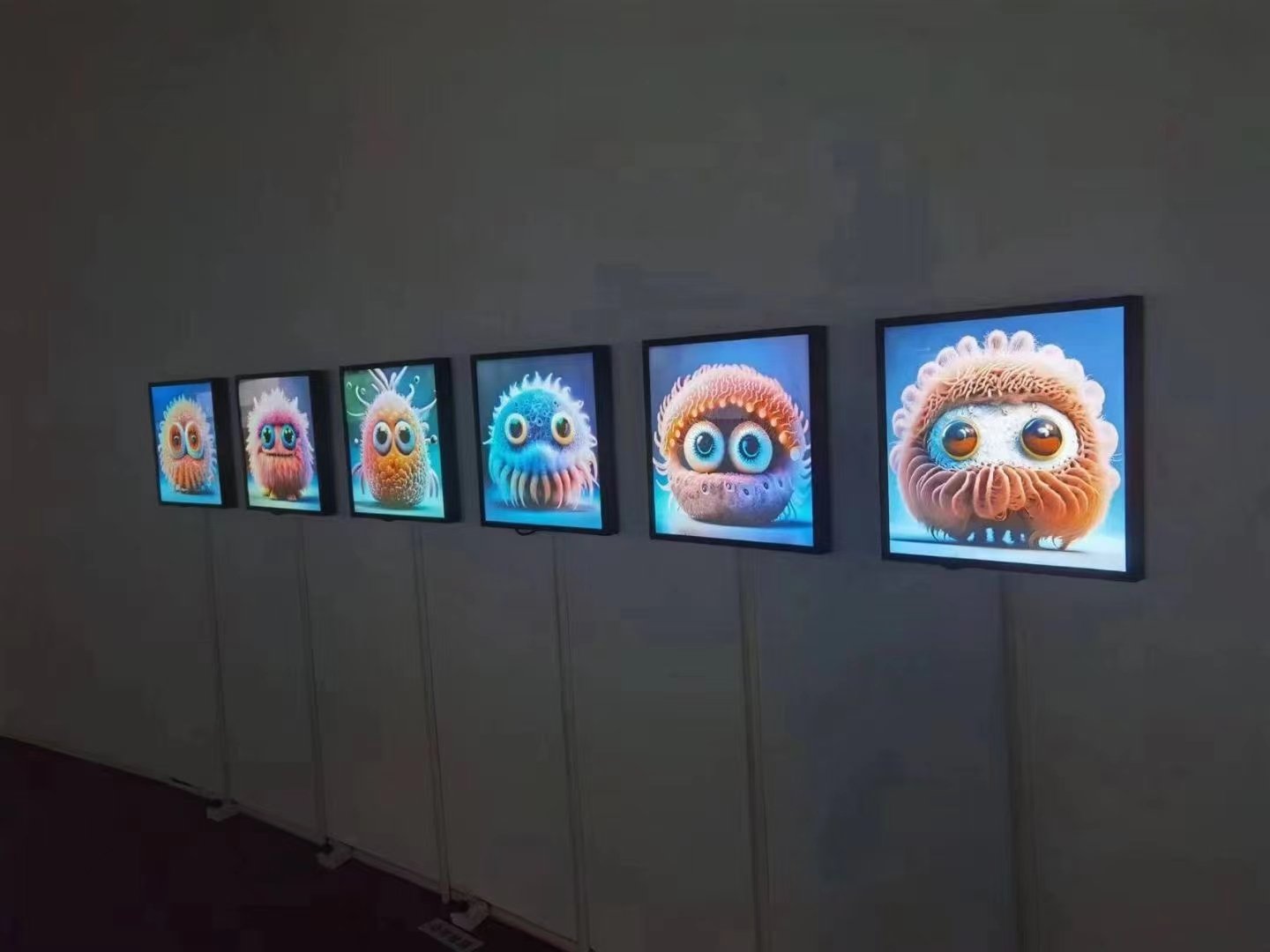
When deploying LCD screens as digital picture frames to showcase fine-art photography, digital illustrations, artistic masterpieces, or upscale brand visuals, the specification that attracts the closest scrutiny is almost invariably the contrast ratio. Seeing a figure like '3,000:1' or '5,000:1' on a datasheet creates the impression that a single number guarantees deep, richly layered imagery.
In commercial reality, optical rendering is far more nuanced. Below is an objective analysis breaking down contrast ratio, panel physics, and real-world lighting factors.
What Contrast Ratio Is and Why It Matters
Contrast ratio represents the luminance ratio between the brightest white and the darkest black that a display can produce simultaneously. A higher ratio indicates a wider dynamic range between highlight and shadow, rendering finer shadow gradations, richer dark backgrounds, and subtle tonal transitions.
In a picture frame display scenario, its significance is immediate: across dark scenes—such as nocturnal cityscapes, classical oil painting chiaroscuro, or product photography set against pitch-black backgrounds—if black levels wash out into milky gray, the image appears veiled behind haze, significantly degrading perceived texture and luxury.

Inherent Characteristics of LCD: True Black Is Difficult to Achieve
LCD panels do not emit light natively; they rely on continuous LED backlights, utilizing liquid crystal molecules to gate how much light traverses each subpixel. The physical constraint is that liquid crystal molecules cannot completely block 100% of the light. When rendering black, minor light leakage inevitably occurs, causing LCD blacks to exhibit a faint grayish glow.
This is not an engineering defect of any single manufacturer, but a fundamental characteristic of transmissive LCD physics. Achieving perfect absolute blacks requires self-emissive display technologies. In LCD engineering, the goal is suppressing light leakage to make dark levels as deep as physically possible.
Therefore, evaluating contrast ratio across LCDs is relative: you are comparing which panel suppresses light leakage better, rather than expecting the absolute zero-nit blacks of self-emissive screens.
Clarifying Which Contrast Metric Is Stated in Specifications
When reviewing datasheets, distinguish between two fundamentally different contrast metrics:
Static (Native) Contrast Ratio describes the simultaneous luminance ratio between the brightest and darkest points within a single frozen frame that the panel glass natively achieves. This figure reflects the authentic optical capability of the LCD glass.
Dynamic Contrast Ratio is achieved by modulating overall LED backlight brightness according to changing scene content (dimming backlights during dark frames and brightening them during highlights). This yields astronomical marketing numbers (e.g., millions to one), but describes differences between separate scenes rather than contrast within a single static frame, offering little practical value for static art framing.
Whenever you encounter an extraordinarily large contrast number, clarify: Is this native static contrast or dynamic contrast, and under what test benchmarks was it measured? Measurement standards vary across panel foundries, making raw cross-brand numbers difficult to compare directly.
Panel Types: Key Trade-offs Between IPS and VA
Commercial LCD panels utilize different liquid crystal alignment structures, each offering distinct optical trade-offs:
In-Plane Switching (IPS) Panels: Celebrated for ultra-wide viewing angles and outstanding color stability. When viewed from oblique side angles, colors do not shift or distort, making IPS ideal for public art galleries, commercial showrooms, and retail spaces where audiences view screens from diverse angles. However, IPS native contrast ratios typically hover around 1,000:1 to 1,200:1, yielding slightly lighter dark tones.
Vertical Alignment (VA) Panels: Molecules align perpendicular to substrates, achieving superior native black suppression and higher static contrast ratios (typically 3,000:1 to 5,000:1). However, VA panels suffer from narrower effective viewing angles; off-axis viewing reveals noticeable gamma shifts and contrast wash-out.
Neither panel type is universally superior; selection depends on deployment geometry: for multi-angle public viewing requiring color consistency, IPS is superior; for direct-facing viewing dominated by dark art, VA provides deeper blacks. For example, the 33.3-inch square display featured on our website utilizes an IPS panel, delivering wide viewing angles and stable color performance; exact contrast specifications should be verified against model datasheets and physical samples.

Ambient Room Light: Often Far More Decisive Than Datasheet Specs
A critical operational reality is frequently overlooked: manufacturer contrast ratios are measured inside completely dark laboratory test chambers. In real-world art galleries, corporate lobbies, and retail boutiques, ambient light from ceiling fixtures and exterior windows illuminates the screen face, reflecting directly back into viewers' eyes.
Surface reflections artificially raise the perceived black level, washing out shadow details and drastically diminishing effective contrast. The brighter the ambient room lighting, the more severe this contrast wash-out becomes. Consequently, the exact same display that looks deep and dramatic in a dim gallery can appear flat and grayish in a brightly lit boutique.
This means: rather than blindly chasing inflated datasheet numbers, optimize physical lighting first. Practical measures include: orienting screens away from direct window backlighting, angling directional ceiling spotlights away from the screen face, specifying matte anti-glare (AG) or anti-reflective (AR) surface treatments, and calibrating screen luminance to match ambient lux levels. Anti-glare coating availability varies by model and should be inspected on physical units.
Creative Content Quality Affects Perceived Contrast
The dynamic range and grading of the media assets themselves heavily dictate perceived contrast. High-resolution images featuring rich tonal gradations and well-calibrated dynamic range naturally render with striking visual depth. Conversely, a poorly graded, underexposed, or hazy photograph will look flat regardless of how expensive the display is.
Operating brightness calibration is equally decisive: setting panel luminance to maximum in a dim room drives backlight leakage higher, making blacks grayer and degrading perceived contrast; setting brightness too low in bright rooms causes underexposure. Calibrate backlight output to harmonize with room lighting rather than defaulting to 100% power.
How to Verify Display Performance Firsthand On-Site
Evaluating physical sample units on-site is far more dependable than reading datasheets.
Prepare representative test images: a dark nocturnal landscape, an image dense with subtle shadow textures, a high-key portrait with bright highlights, and a solid black test slide. Inspect the display under your actual room illumination: verify whether blacks look deep, whether shadow textures remain discernible, whether highlights blow out, and whether color transitions appear natural.
Step to the sides to observe off-axis performance: does color or contrast shift noticeably? Finally, adjust brightness settings to identify the most comfortable visual calibration. Comparing two or three candidate displays side-by-side reveals optical differences immediately.
Frequently Asked Questions (FAQ)
Does a higher contrast ratio guarantee superior picture quality?
Not on its own. Contrast ratio is merely one component of visual fidelity; color accuracy, luminance uniformity, viewing angles, optical surface treatments, and creative asset grading are equally vital.
Can an LCD panel achieve the absolute pure blacks of self-emissive screens?
No. Because LCD relies on LED backlights, minor light leakage is physically inevitable. Quality engineering focuses on minimizing leakage to deepen black levels as much as possible.
Are picture frame displays suitable for brightly lit environments?
Yes, provided ambient reflections are managed via strategic placement, calibrated brightness, and matte anti-glare (AG) optical glass treatments.
How should buyers choose between IPS and VA panels for digital framing?
Select IPS for spaces with wide, multi-angle viewing where color consistency is paramount; select VA for direct-facing viewing where deep shadow contrast is prioritized. Evaluate physical samples before ordering.
Conclusion
While contrast ratio is an important visual metric, it is only one piece of the optical equation. Clarifying native versus dynamic metrics, recognizing LCD physical characteristics, weighing IPS versus VA trade-offs, and managing ambient room reflections provides a far more reliable foundation for selection than chasing large datasheet numbers.
ZXTLCD specializes in the design and manufacturing of shelf-edge stretched bar displays and specialized custom-format LCD screens, spanning stretched bars, square displays, and round screens, supporting comprehensive OEM/ODM engineering tailored to installation dimensions. If your project requires square displays for visual art or brand presentation, share your mounting location, ambient lighting, and application scenarios with our team for prompt consultation. Official website: www.shelflcd.com
Looking for customized commercial LCD Picture Frame Screen & Digital Art Frame Display solutions, high-definition displays, or LCD Picture Frame Screen, Digital Art Frame Display, Smart Photo Frame Monitor hardware? Feel free to contact the ZXTLCD engineering team for engineering specifications, CAD drawings, and factory-direct volume quotes.
Featured Commercial Hardware: Explore our high-performance 51 Inch 4K Digital Signage Photo Frame Smart Picture Square LCD Monitor for Art and 25.9 Inch Art Frame Digital LCD 4K Square Screen Display engineered specifically for demanding modern digital signage spaces.