Buying Guides
How to Choose Stretched Bar Display Dimensions Without Waste: Look Beyond Diagonal Inches and Measure These Five Key Figures First
The most common procurement mistake when specifying stretched bar LCD displays is comparing screens purely by diagonal inch ratings. While diagonal measurements provide a reliable
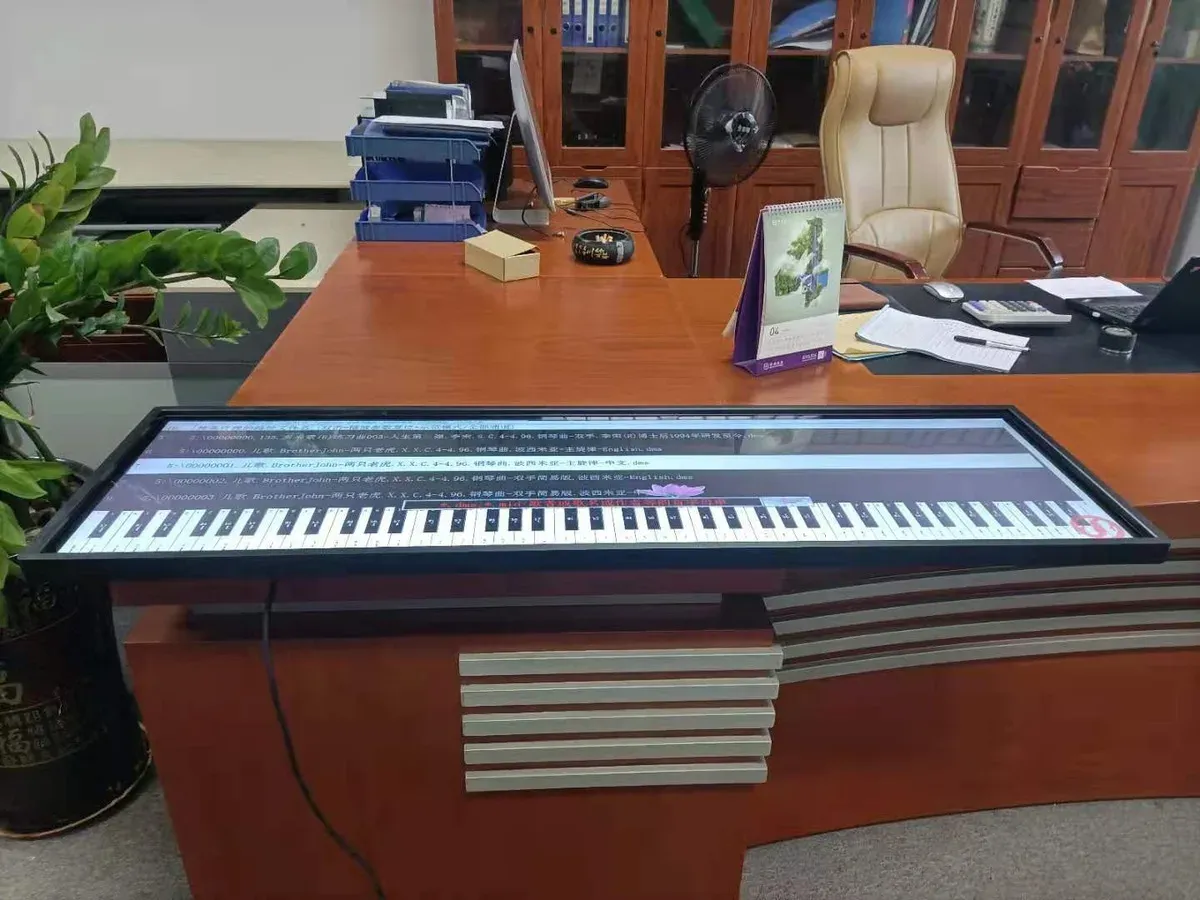
The most common procurement mistake when specifying stretched bar LCD displays is comparing screens purely by diagonal inch ratings. While diagonal measurements provide a reliable baseline for standard 16:9 monitors, they tell you almost nothing about a stretched display: two panels both labeled as 'around 20 inches' can differ vastly in physical width and vertical height. Buying by diagonal size alone frequently yields displays that leave awkward perimeter gaps or simply fail to fit inside structural cutouts.
The reliable approach reverses the process: measure physical installation clearances first, then specify the screen. Prior to procurement, measure and confirm these five crucial figures.
Figure 1: Available Cutout Length and Vertical Height
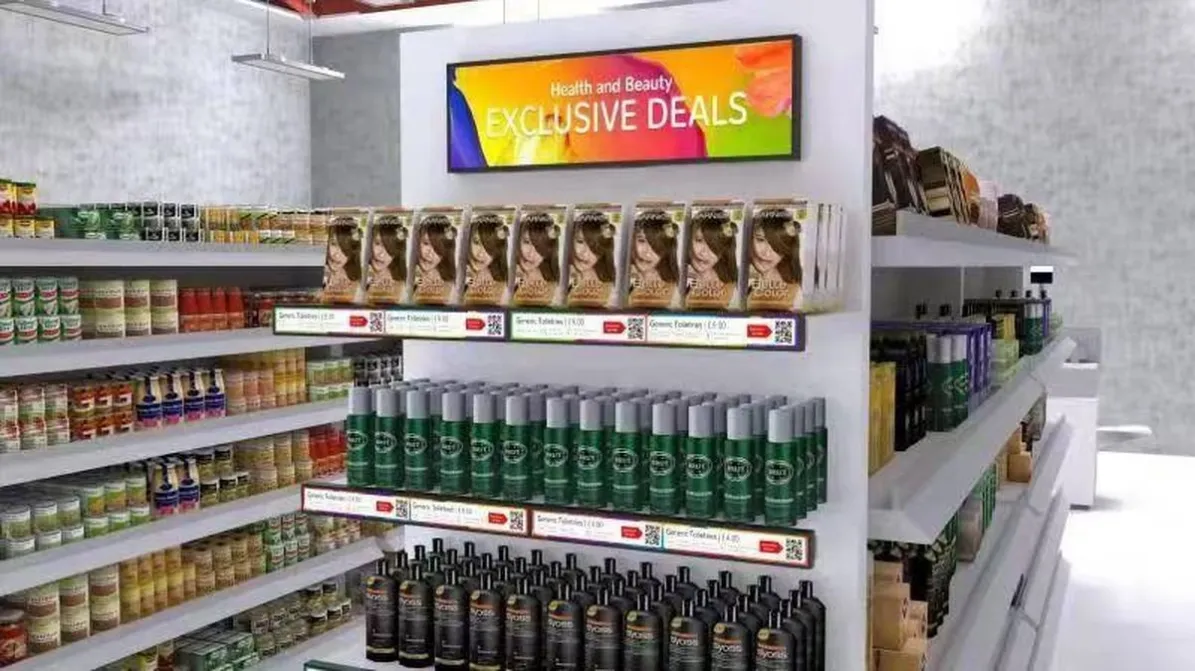
This represents the foundational measurement. Measure the exact usable width and height along gondola shelf edges, showcase grooves, or storefront window recesses in millimeters—never rely on rough visual estimates. The outer mechanical dimensions of the stretched display must sit slightly smaller than the structural cutout, preserving necessary assembly tolerances: an oversized chassis will not fit, while an overly loose cutout creates unsightly gaps that accumulate dust.
Where structural shelving or cabinetry is already fabricated, strictly match hardware to verified site measurements rather than attempting to force 'close enough' standard screens.
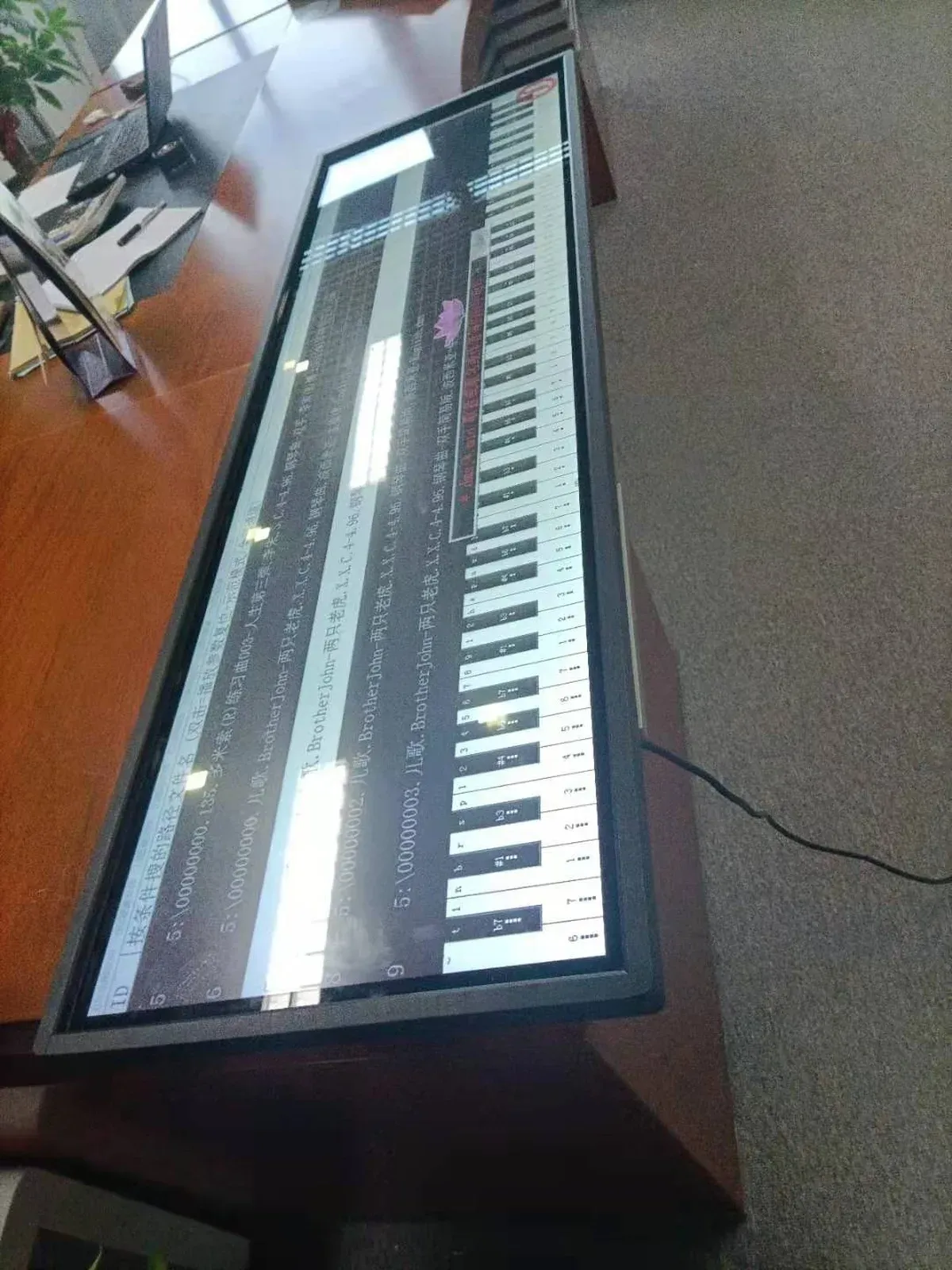
Figure 2: Mounting Recess Depth
Buyers routinely measure width and height while forgetting mounting depth. When embedding a stretched display into cabinetry or shelving, the recess must accommodate chassis thickness, protruding connector plugs (HDMI/DC), bend radii for cables, and convective rear ventilation clearance. Insufficient depth forces the display to protrude awkwardly, crushes power cords, and traps internal heat.
If the design relies on front- or rear-access extraction for servicing, reserve the necessary extraction pull-out clearance as well. Always ask: When a screen eventually requires servicing, how will technicians extract it?
Figure 3: Primary Viewer Distance
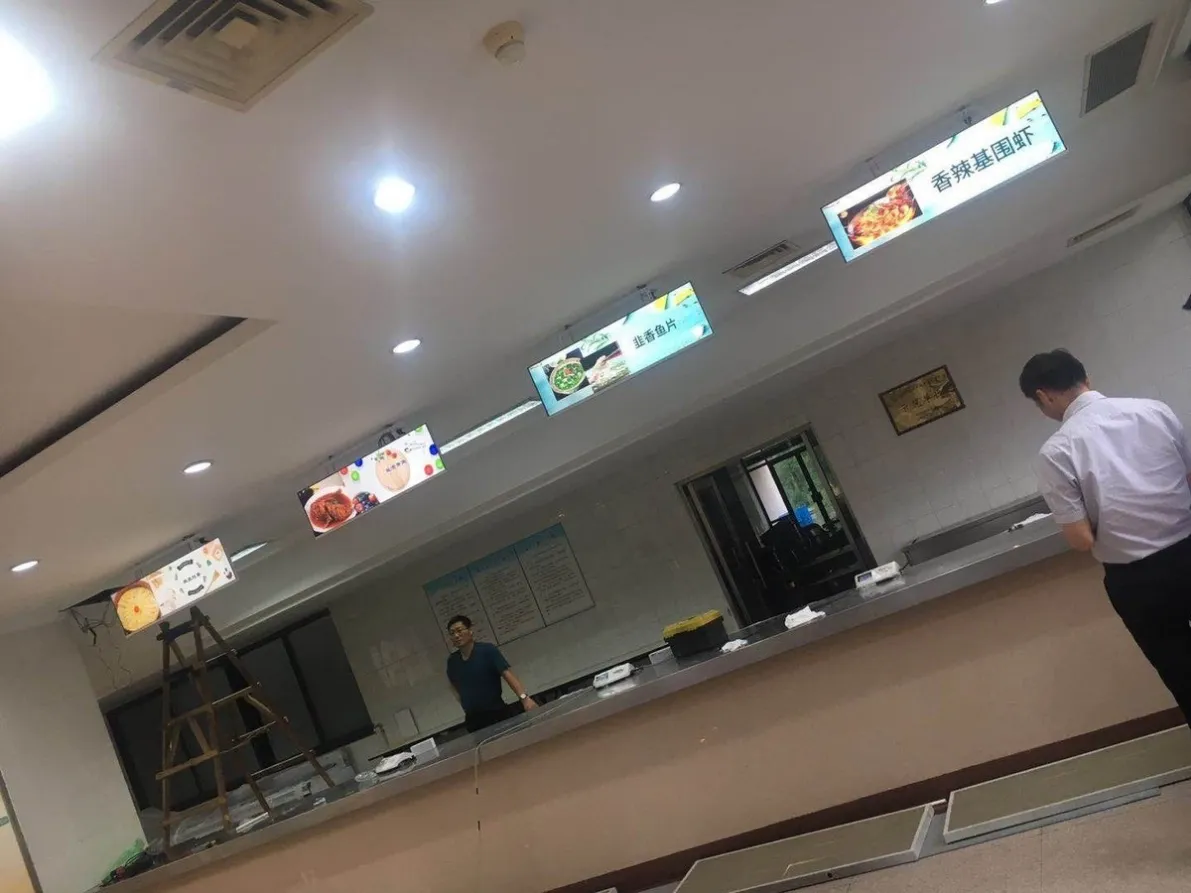
Viewing distance dictates optimal screen scale, minimum font typography, and required nit luminance. For shelf-edge screens viewed from one to two feet away, layouts must remain clean with crisp pricing typography and moderate indoor brightness (300–500 nits), avoiding uncomfortable eye glare. For screens mounted aloft above service counters or inside storefront display windows viewed from afar, larger dimensions, bold fonts, and higher brightness are necessary.
Pay special attention to window-facing spots exposed to natural daylight, where standard indoor brightness appears washed out. Evaluate physical sample units on-site under daytime illumination rather than guessing brightness requirements.
Figure 4: Creative Content Aspect Ratio
Stretched displays utilize non-standard ultra-wide aspect ratios vastly different from standard monitors; creative media assets must be authored directly to the panel's native pixel resolution. Forcing standard 16:9 horizontal video onto a stretched screen produces awkward horizontal stretching or severe center cropping.
Coordinate creative production alongside hardware selection: compile a master spreadsheet logging the exact native pixel resolution of every display screen across your store so designers author graphics directly to specification. Finalizing media resolution templates early prevents frustrating deployment delays.
Figure 5: Power Outlet and Cable Conduit Locations
Display dimensions are standardized, whereas AC power feeds and network drops depend on physical site construction. Map out electrical outlet coordinates, surface vs. concealed conduit pathways, and verify that cables avoid crushing by heavy retail merchandise during architectural drafting. Many costly site reworks occur simply because power cords fall short after displays are mounted.
For networked cloud displays, confirm wired Ethernet availability or Wi-Fi signal strength at exact mounting points.
Off-the-Shelf Standard Sizes vs. Custom Engineering
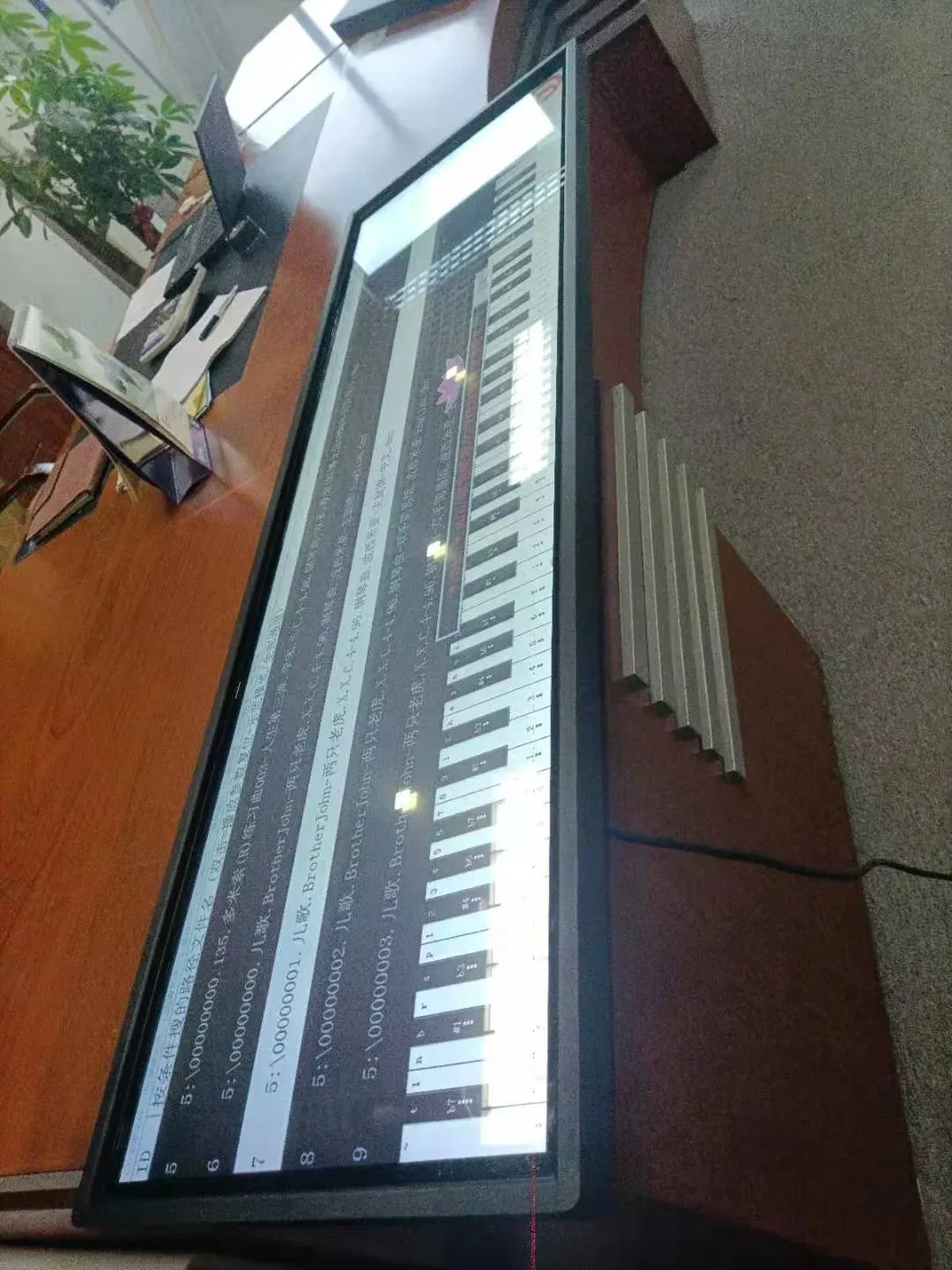
Many projects operate seamlessly with existing mature stretched sizes. Sharing measured cutout dimensions with your supplier allows them to match existing off-the-shelf tooling, saving custom NRE expenses and shortening delivery lead times. Custom tooling is required primarily for curved profiles or unconventional architectural niches.
The shelf-edge stretched bar displays showcased on our website focus primarily on compact-to-medium commercial sizes while supporting comprehensive OEM/ODM custom engineering tailored to exact physical dimensions. Remember that diagonal inches remain purely a reference—verify exact millimeter length, height, and depth.
Batch Consistency for Multi-Unit Rollouts
When installing a continuous row of a dozen stretched screens along a supermarket aisle, visual consistency is paramount: mismatched brightness or shifting color temperature across adjacent screens degrades store aesthetics. For volume orders, require single-batch factory optical calibration, inspecting random units side-by-side upon delivery. Standardize content resolutions across matching tiers to ensure uniform typography scale.
Where synchronized multi-screen playback is required, verify that your digital signage CMS software and local network support synchronized distribution.
Pre-Installation Self-Audit Checklist
Before finalizing orders, verify: Have cutout length and vertical height been measured in millimeters? Is recess depth sufficient for connectors and cooling? Have viewing distance and ambient glare been evaluated? Are creative content aspect ratios confirmed with designers? Are AC power drops and cable conduits mapped on drawings?
Confirming these five measurements transforms stretched signage from 'looks roughly right' into 'fits cleanly, reads crisply, and manages effortlessly.'
ZXTLCD specializes in the design and manufacturing of shelf-edge stretched bar displays and specialized custom-format LCD screens, spanning stretched bars, square displays, and round screens, supporting comprehensive OEM/ODM custom engineering. If you have specific mounting locations, share your cutout length, height, depth, viewing distance, and application scenarios with us to evaluate the ideal specifications. Official website: www.shelflcd.com
Looking for customized commercial Stretched Bar Display Dimension Selection solutions, Stretched Bar Display Dimensions, Shelf Bar Screen Size Guide, Ultra-Wide LCD Size Selection, or tailored ultra-wide display hardware? Feel free to contact the ZXTLCD engineering team for engineering specifications, CAD drawings, and factory-direct volume quotes.
Featured Commercial Hardware: Explore our high-performance 105 Inch 5K Panoramic Stretched Bar LCD Display for Boardroom & Hall and 88 Inch Ultra Wide Stretched Bar LCD Monitor engineered specifically for demanding modern retail shelf and digital signage spaces.