News & Insights
What Does the Future Hold for Square LCD Displays? Emerging Industry Trends and Strategic Procurement Insights
Discussions surrounding 'future industry trends' often devolve into vague generalizations: 'the market will expand continuously' or 'technology will innovate ceaselessly.
Discussions surrounding 'future industry trends' often devolve into vague generalizations: 'the market will expand continuously' or 'technology will innovate ceaselessly.' Such statements are easily written, yet provide zero practical utility for commercial buyers.
This analysis takes a pragmatic approach: rather than predicting abstract numbers, it examines concrete operational shifts already occurring across commercial project sites, outlining exactly what these trends mean for procurement teams.
Shift 1: From Off-the-Shelf Standard Screens to Site-Specific Customization
Historically, buying commercial displays meant browsing whatever standard sizes foundries produced, then figuring out how to force them into architectural spaces. Today, leading projects reverse that process: measuring available spatial contours first, then determining matching display aspect ratios and dimensions.
The surging adoption of square screens, stretched bars, and round displays reflects this reality: retail gondola endcaps, exhibition plinths, kiosk bezels, and brand feature walls are rarely 16:9 rectangles.
Strategic Procurement Insight: Rather than asking suppliers 'what standard catalog sizes do you carry,' document your site dimensions and operational scenarios first, evaluating whether suppliers provide flexible custom engineering. ZXTLCD supports OEM/ODM custom engineering tailored to site specifications.
Shift 2: From Pure Display Glass to Integrated 'Screen Plus OS' Solutions
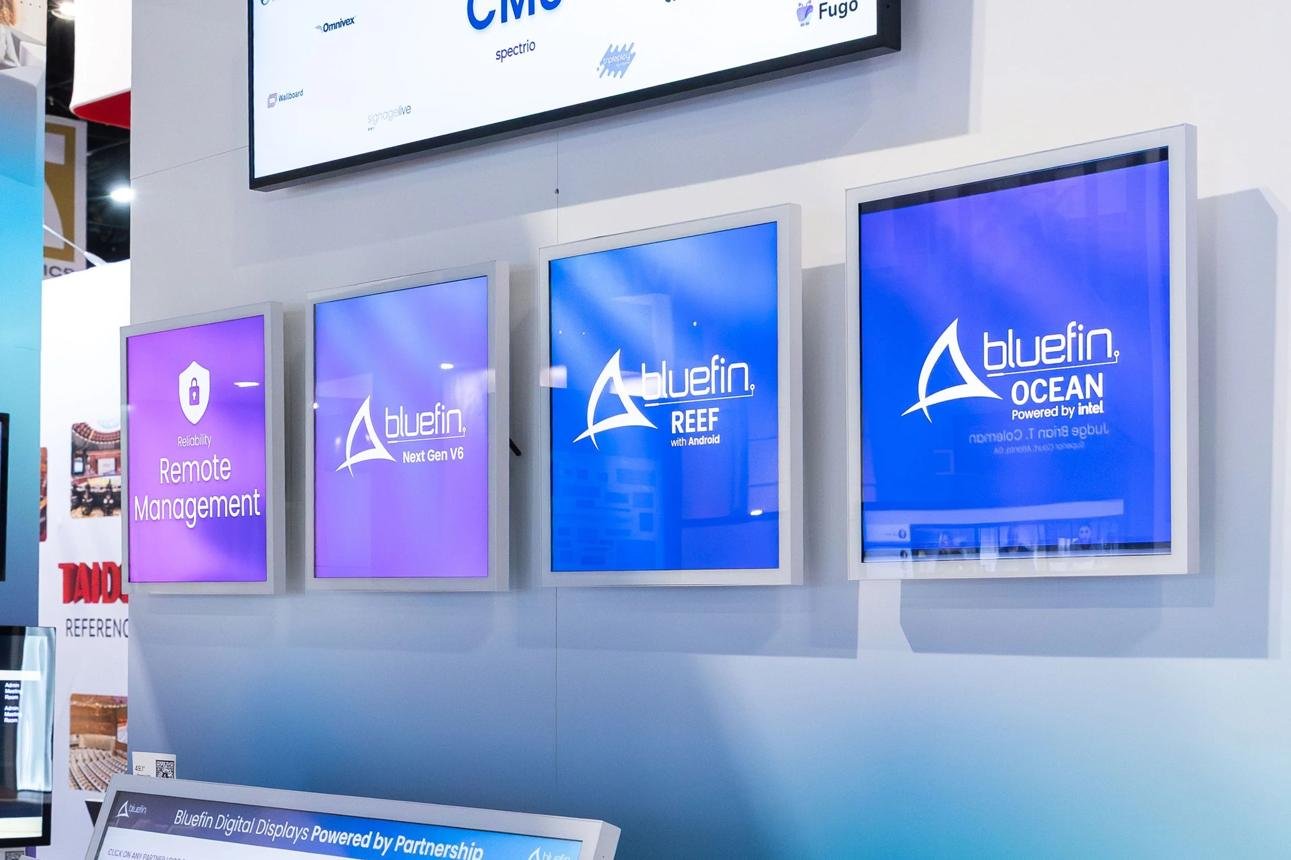
Early commercial displays functioned purely as passive monitors requiring external PC media players. Modern commercial square displays increasingly integrate onboard Android or Windows compute motherboards, equipped with HDMI, Ethernet LAN, and Wi-Fi to run digital signage CMS software natively for scheduled media playback and remote updates.
This integration eliminates external media boxes, streamlines cabling, and fits into tight architectural alcoves. For example, the 33.3-inch square display featured on our website offers Android or Windows, HDMI, LAN, Wi-Fi, and integrated CMS.
Strategic Procurement Insight: Treat compute architecture and networking as core specifications alongside panel glass. Determine in advance who updates content, update frequency, and whether multi-site fleet management is needed.
Shift 3: From Standalone Updating to Centralized Cloud Management
Managing a couple of displays via manual USB flash drives is tolerable. As display counts expand—particularly across multi-branch retail chains—centralized cloud management becomes an operational necessity: unified media authoring, synchronized network broadcasting, automated power timers, and real-time device health telemetry.
This shift applies directly to square displays. Buyers increasingly prioritize operational scalability: 'How many personnel are required to manage fifty displays, and how streamlined is the workflow?'
Strategic Procurement Insight: Confirm whether displays support cloud CMS fleet management, audit supported software platforms, verify whether recurring licensing fees apply, and confirm offline caching behavior during network drops.
Shift 4: From Wall-Hung Monitors to Seamless Architectural Integration
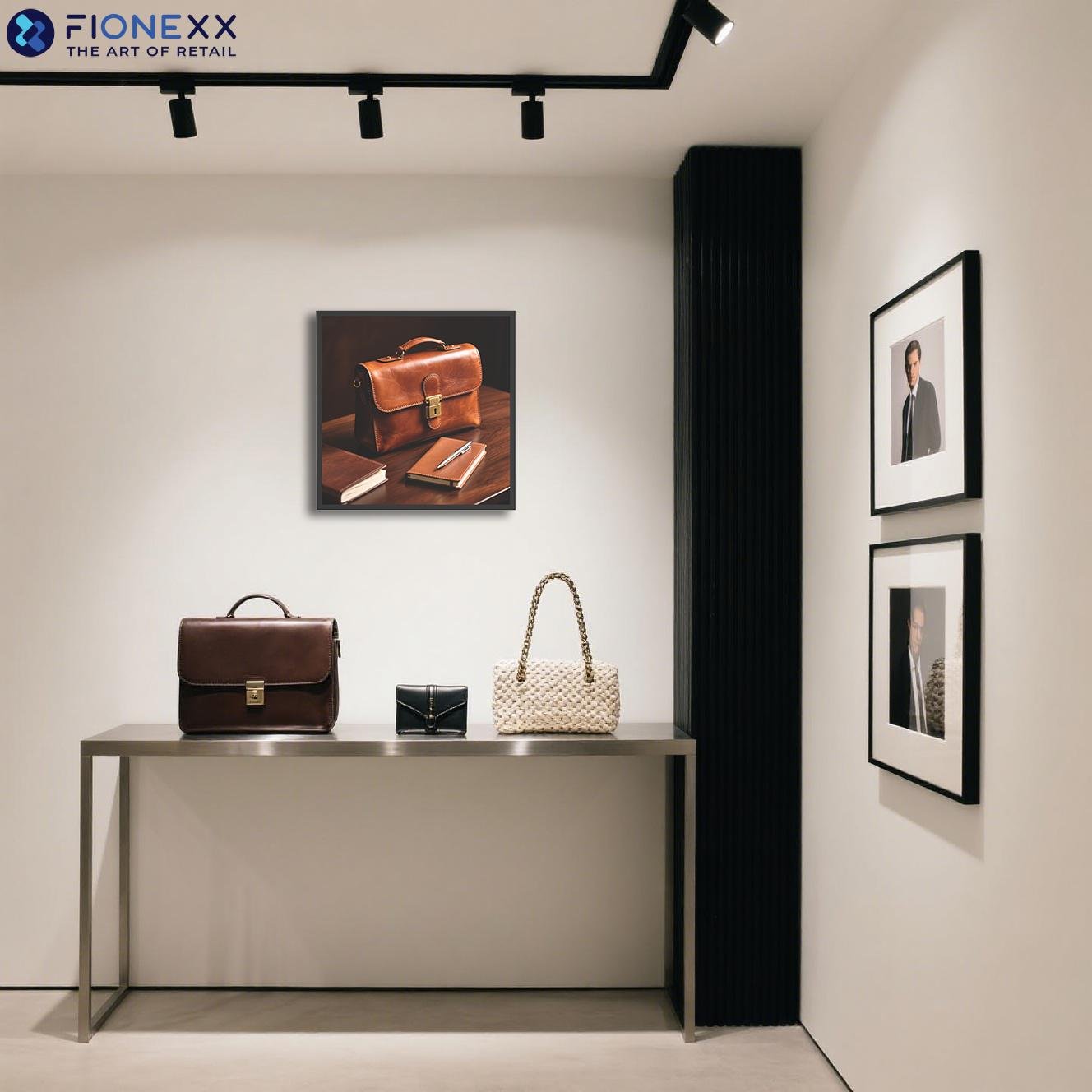
Commercial screens are no longer treated as utilitarian electronic boxes to be concealed; architectural projects increasingly demand that displays become seamless structural elements: recessed flush inside walls, integrated into exhibition plinths, or embedded into custom kiosk cabinetry with ultra-narrow bezels.
Square aspect ratios naturally facilitate this architectural integration. Our square displays offer Open Frame and Embedded mounting configurations tailored to these demands.
Strategic Procurement Insight: For recessed installations, coordinate aperture tolerances, convective thermal dissipation, servicing accessibility, and in-wall conduits during early architectural drafting; retrofitting post-construction carries high costs.
Shift 5: Creative Content Design Becoming Increasingly Decisive
As hardware deployments expand, content often fails to keep pace. Many venues install expensive displays that become neglected after a few months: static, outdated content, or mismatched 16:9 media stretched awkwardly across square screens.
Square displays feature specialized aspect ratios; media assets must be authored directly to native pixel resolution. Creative content quality, update frequency, and assigned operational ownership dictate commercial return on investment far more than hardware alone.
Strategic Procurement Insight: When procuring display hardware, establish a creative content production schedule concurrently, even if it begins with simple weekly updates.
Shift 6: Growing Focus on Continuous Duty Cycles and Operational Reliability
In commercial environments, displays typically operate continuously for long hours. Procurement teams increasingly recognize that low-cost consumer hardware prone to failure and slow service proves vastly more expensive over time.
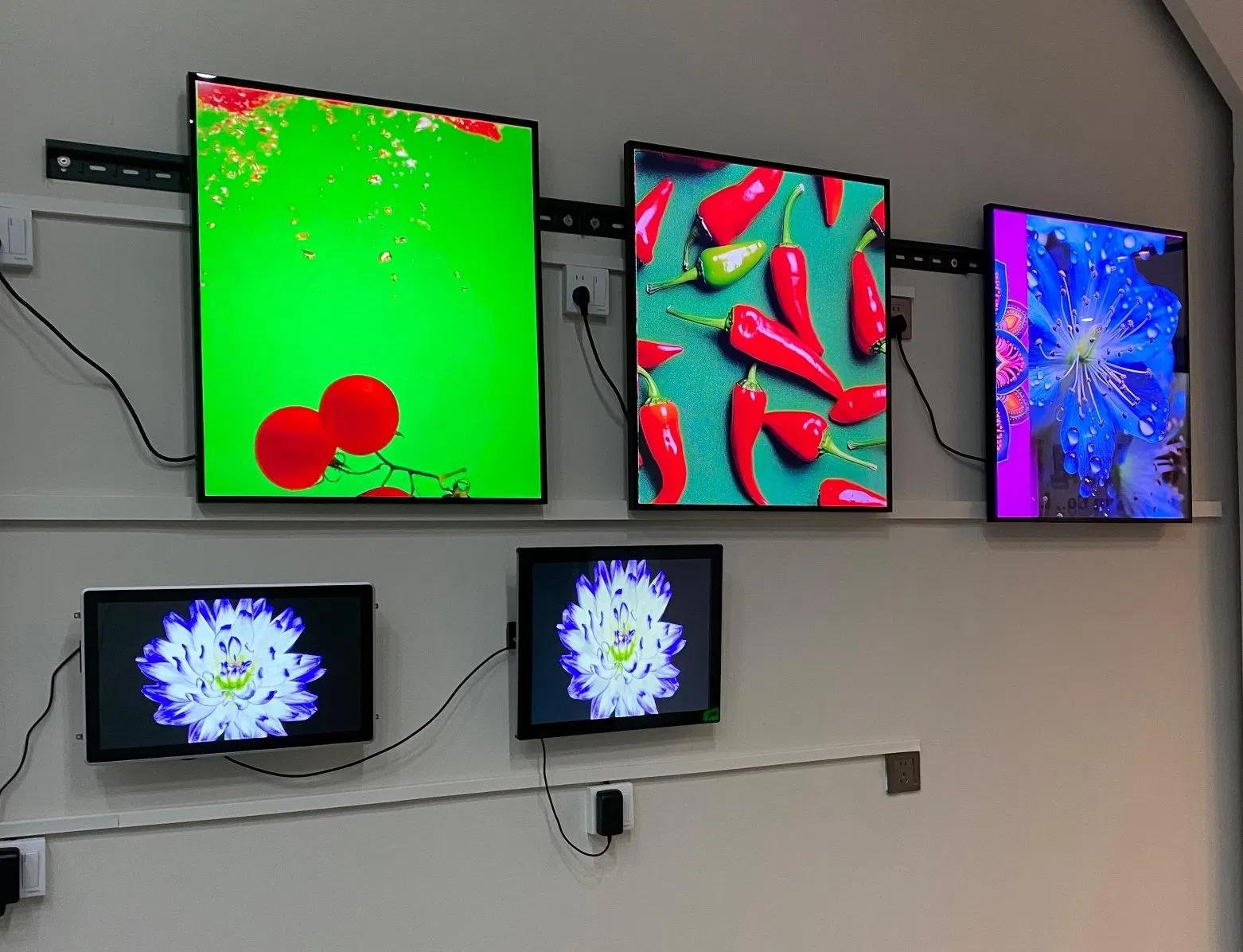
Consequently, terms like 'commercial-grade,' '24/7 continuous duty,' and 'service response SLA' are becoming mandatory technical requirements rather than marketing slogans. Our square displays are certified commercial-grade, supporting 24/7 continuous duty according to model specifications.
Strategic Procurement Insight: Clarify warranty duration, covered components, response turnaround times, and spare parts availability, evaluating physical sample units under real operating conditions before volume purchases.
Market Uncertainties That Cannot Be Promised
Industry marketing often makes absolute assertions that warrant prudent reservation:
'Square screens will replace widescreen monitors.' They will not. Widescreen 16:9 remains the ideal standard for horizontal video and cinema; square displays deliver specialized value in vertical and near-square spaces rather than universal replacement.
'Prices will continuously plummet.' Volume growth improves manufacturing efficiencies, but non-standard aspect ratios and small custom batches depend on specialized processing, with pricing dictated by project specifications rather than automated downward curves.
'A new technology will disrupt everything overnight.' Display technologies evolve steadily, but for commercial buyers, the practical question remains: what hardware best solves your spatial, content, and budgetary requirements today.
Strategic Practical Advice for Procurement Teams
Define physical spatial dimensions and content formats before selecting aspect ratios. Treat onboard computing, cloud CMS software, and centralized management as core specifications. Coordinate recessed mounting cutouts and thermal ventilation during architectural design. Prioritize commercial-grade 24/7 stability and verified warranty SLAs over sticker price alone. Finally, validate performance via physical sample units and pilot deployments before committing to large-scale fleet rollouts.
Frequently Asked Questions (FAQ)
Will square LCD displays become increasingly prevalent in retail?
Yes, across retail gondola endcaps, branded vitrines, and self-service kiosks where square aspect ratios provide superior spatial and content alignment.
Will purchasing square displays today risk premature obsolescence?
Commercial display panel lifecycles move steadily. Focus on whether operating systems support software updates and whether suppliers provide long-term component support.
What is the typical lead time for custom square displays?
Lead times depend on screen diagonal, order volume, and mechanical customization; provide site specifications early to establish production schedules.
How can buyers determine whether a specialized feature is genuinely needed?
Evaluate operational utility: what specific business challenge does the feature solve, and what happens if it is omitted? If no clear operational answer exists, the feature is likely unnecessary.
Conclusion
The future of square LCD displays is unfolding across real project sites: site-specific sizing, integrated compute engines, cloud management, seamless architectural embedding, disciplined content curation, and verified 24/7 reliability. For procurement teams, clarifying site dimensions and operational workflows ensures a dependable, high-return deployment.
ZXTLCD specializes in the design and manufacturing of shelf-edge stretched bar displays and specialized custom-format LCD screens, spanning stretched bars, square displays, and round screens, supporting comprehensive OEM/ODM engineering. If your project has square display requirements, share your site dimensions, application scenarios, and unit quantities with our team for prompt consultation. Official website: www.shelflcd.com
Looking for customized commercial Square LCD Display Future Trends & Procurement solutions, high-definition displays, or Square LCD Display Future Trends, 1:1 Custom Panel Sourcing, Commercial Square Monitor Factory hardware? Feel free to contact the ZXTLCD engineering team for engineering specifications, CAD drawings, and factory-direct volume quotes.
Featured Commercial Hardware: Explore our high-performance 51 Inch 4K Digital Signage Photo Frame Smart Picture Square LCD Monitor for Art and 60 inch Highlight square lcd Art display manufacturer engineered specifically for demanding modern digital signage spaces.