News & Insights
Can Stretched Bar LCD Displays Be Used Outdoors? Clarify These Five Crucial Questions Before Making Your Decision
With their slender, elongated geometry, stretched bar LCD displays seem naturally suited for numerous outdoor architectural touchpoints: bus shelter columns, perimeter railings, en
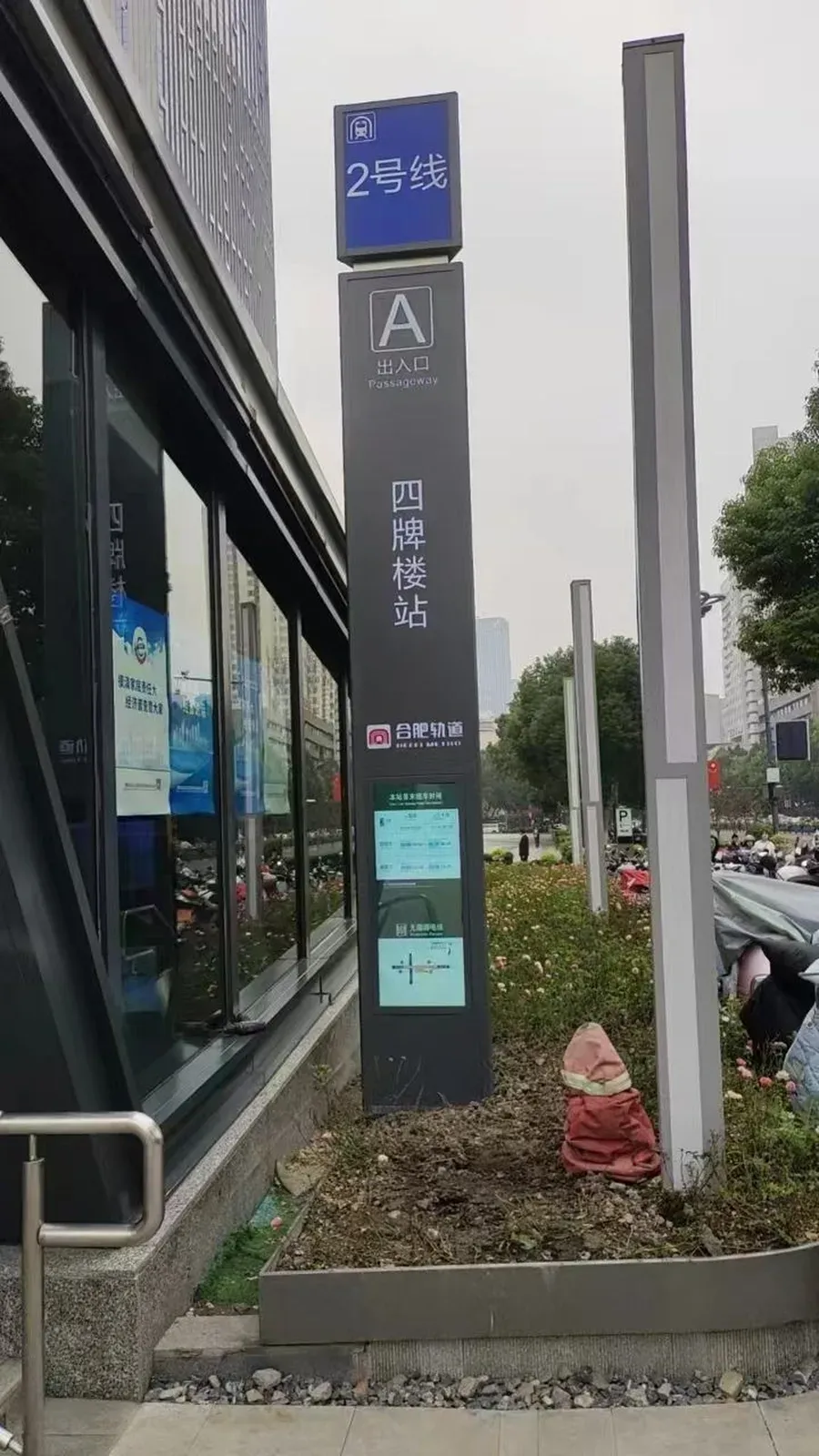
With their slender, elongated geometry, stretched bar LCD displays seem naturally suited for numerous outdoor architectural touchpoints: bus shelter columns, perimeter railings, entrance door transoms, and scenic park trail markers. Yet exterior weather is unforgiving—deploying a standard indoor commercial stretched display outdoors almost invariably leads to rapid hardware failure.
Engineering an outdoor-ready display is vastly more complex than 'placing an indoor screen inside a waterproof shell.' Before deploying stretched displays outdoors, thoroughly evaluate these five critical engineering questions.
1. Protective Enclosure: Guarding Against Far More Than Rain
An outdoor enclosure must simultaneously resist driving rain, windborne particulate dust, internal moisture condensation, mold growth, solar UV aging, coastal salt spray, industrial acid rain, and public physical vandalism. Regional threats vary widely, dictating distinct sheet-metal metallurgy, surface coatings, and gasket sealing designs.
Crucial Questions to Ask: Does the certified IP rating cover the entire integrated kiosk assembly, or only the front glass face? How are cable entry glands, perimeter seams, and cooling louvers baffled against moisture? What enclosure alloy and multi-stage anti-corrosion coating are used? Is the front protective glass tempered and optically treated? Are anti-tamper security locks incorporated?
Because stretched bar displays feature ultra-wide perimeters, total gasket seam length is exceptionally long relative to screen area—making continuous precision gasket sealing far more critical for long-term durability than on standard square screens.
2. Thermal Dissipation: Trapped Heat Destroys Lifespan
Under direct outdoor sunlight, internal chassis temperatures soar significantly higher than ambient air. Stretched bar displays feature ultra-slim chassis profiles with minimal internal air volume, constraining convective cooling space. As temperatures spike, system protection circuits automatically throttle backlight brightness—dimming the screen right when midday sun demands peak power—or force thermal shutdowns while accelerating electronic component aging.
Evaluate cooling architectures closely: does the display rely on passive conduction, forced-air centrifugal fans, or active heat exchangers? How does the design balance airtight weather sealing against cooling airflow? Review verified performance data and reference installations operating continuously under comparable summer heat.
3. Luminance and Anti-Glare: Brightness Alone Fails Without Reflection Control
The primary outdoor display hurdle is daytime sunlight legibility. Panels must deliver sufficient luminance while suppressing surface glare, otherwise outer glass acts like a mirror obscuring displayed content.
While buyers frequently seek a single universal nit figure for 'outdoor readability,' no rigid industry minimum applies across all sites—requirements vary drastically depending on shade canopies, solar compass orientation, and viewing distance. Look beyond raw numbers: verify whether quoted nits measure bare LCD glass or finished kiosk output through protective laminated glass; verify anti-reflective (AR) or anti-glare (AG) optical glass coatings; and evaluate physical sample units outdoors under bright midday sun firsthand.
4. Sub-Zero Cold: Planning for Freezing Northern Winters
Standard commercial LCD panels possess restricted operating temperature envelopes. During sub-zero northern winters, temperatures plunge well below standard limits: liquid crystal molecular viscosity thickens, causing sluggish pixel response, severe motion ghosting, cold-boot failure, and permanent electronic stress.
Verify that rated operating temperatures encompass your regional historical winter lows, confirming whether active internal heating elements and pre-heat boot logic are integrated, backed by accredited laboratory test reports. Strictly distinguish Operating Temperature from unpowered Storage Temperature.
5. Automated Day/Night Brightness Modulation: Visual Comfort and Power Efficiency
Peaking at daytime outdoor brightness (2,000+ nits) during dark night hours is blindingly uncomfortable for passersby, wastes substantial electrical energy, and accelerates LED backlight luminous decay. Sound engineering utilizes ambient optical sensors or automated dayparting schedules to boost luminance at noon and dim smoothly at dusk and night. Confirm smooth dimming transition curves with your supplier.
A Non-Negotiable Engineering Boundary
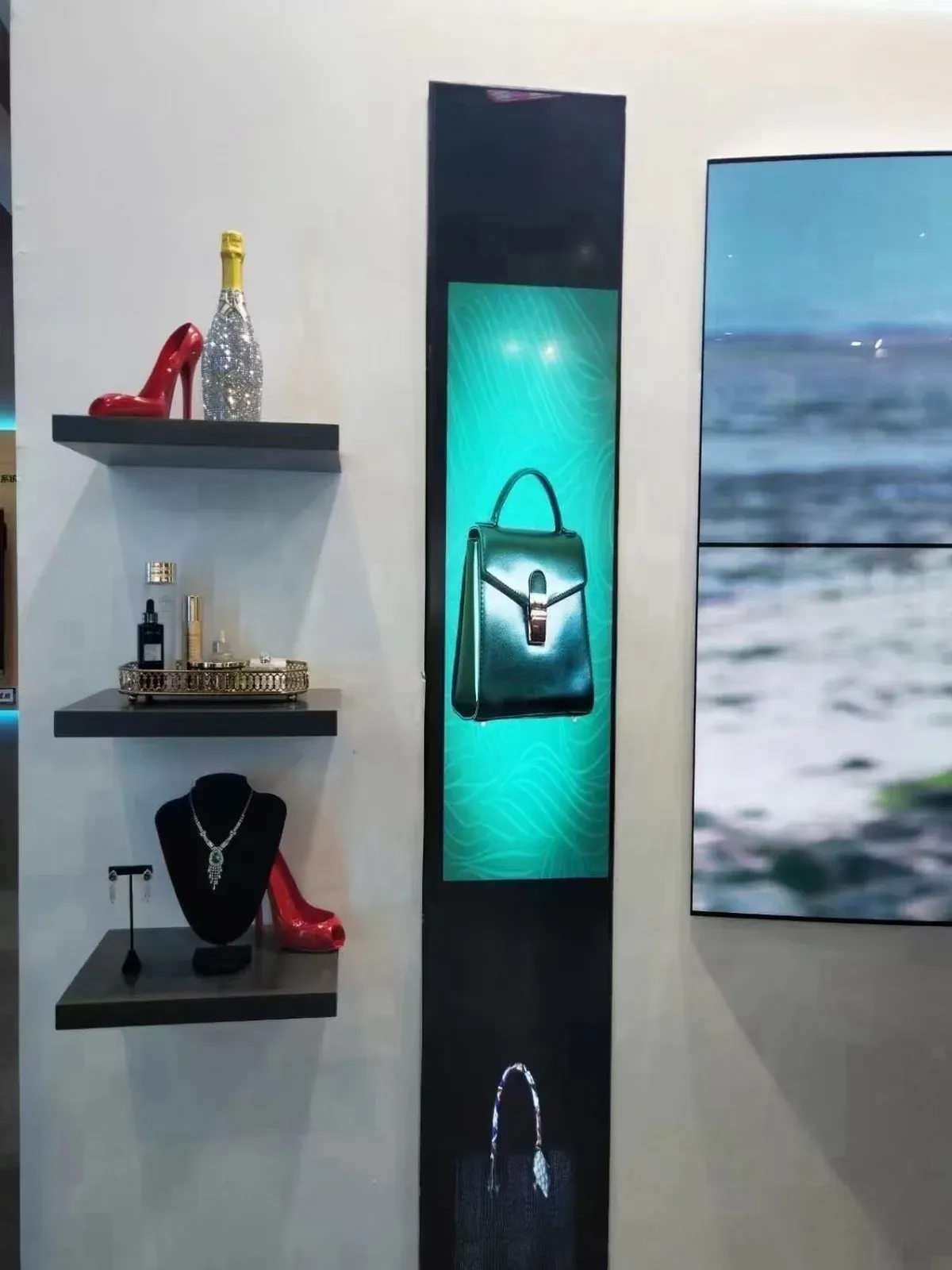
We must emphasize clearly: standard indoor stretched bar LCD displays cannot be deployed outdoors directly. The vast majority of commercial stretched screens on the market are built for indoor retail shelves, checkout headers, and interior showcase windows—engineered around indoor brightness, seals, and temperature specs. Exposing indoor models to rain and direct solar baking produces catastrophic failure rates.
Genuine outdoor deployment requires purpose-built outdoor hardware backed by verified engineering credentials across all five pillars above. Always communicate exact installation coordinates, shelter canopies, and regional climates to your supplier rather than simply asking 'can this go outside?'
Questions to Vet Outdoor Stretched Display Candidates
Is the model engineered specifically for indoor, semi-outdoor, or full-outdoor exposure? What are its certified IP ingress ratings and accredited laboratory test reports? Does its verified operating temperature range cover regional summer highs and winter lows? Is quoted luminance measured finished kiosk output, and is AR/AG anti-reflective glass applied? What thermal dissipation architecture prevents summer overheating? Can the vendor supply verified reference deployments in comparable climates? What are contractual warranty terms?
Reputable manufacturers provide clear, verifiable answers; treat vague claims like 'yes, it works outdoors' with heightened skepticism.
Two Additional Outdoor Mounting Imperatives
Structural Wind Anchoring: Stretched screens mounted on outdoor pylons, perimeter railings, or building facades endure persistent wind loading and vibrations; specify heavy-duty structural anchors executed by certified contractors.
Municipal Permitting Compliance: Outdoor commercial signage along public streets and parks is governed by local urban zoning codes; verify required municipal approvals prior to installation.
Frequently Asked Questions (FAQ)
If a stretched display is made waterproof, is it automatically outdoor-ready?
Not automatically. Waterproofing is merely one factor; outdoor survival equally demands active thermal cooling, high sunlight luminance, anti-reflective optics, cold-weather heating, and UV-resistant metallurgy.
Do sheltered semi-outdoor canopies require full outdoor models?
Under deep architectural canopies shielded from rain and direct sun, semi-outdoor high-brightness displays may suffice, though ambient temperature extremes and humidity must still be evaluated.
How many nits of brightness are sufficient for outdoor stretched displays?
No universal figure fits all sites; brightness depends on direct solar orientation, canopy shading, and viewing distance. Evaluating physical sample units outdoors in daylight provides the surest benchmark.
Can installers simply build a DIY waterproof box around an indoor stretched display?
It is strongly advised against. Adding an unengineered sealed box traps internal backlight heat, inducing severe thermal throttling and internal condensation that rapidly destroys the panel.
Conclusion
Deploying stretched bar LCD displays outdoors requires mastering five interdependent engineering pillars: multi-threat enclosure protection, compact thermal dissipation, sunlight legibility with reflection control, cold-weather heating, and automated day/night dimming. Clarifying physical site exposure and regional climate first to specify purpose-built outdoor hardware is infinitely safer and more economical than forcing indoor screens outside.
Looking for customized commercial Outdoor-Capable Stretched Bar Display solutions, Outdoor Stretched Bar Display, Weatherproof Bar LCD Screen, High-Brightness Outdoor Bar Monitor, or tailored ultra-wide display hardware? Feel free to contact the ZXTLCD engineering team for engineering specifications, CAD drawings, and factory-direct volume quotes.
Featured Commercial Hardware: Explore our high-performance 49.5 Inch Ultra-Wide Stretched Bar LCD Monitor with PCAP Touch and 88 Inch Ultra Wide Stretched Bar LCD Monitor engineered specifically for demanding modern retail shelf and digital signage spaces.