Oct 12, 2026Buying Guides
Stretched Bar LCD Pricing Explained: Glass Cutting, Backlight Engineering, and Production Costs
Deploying an advanced <strong>Stretched Bar LCD Pricing</strong> provides commercial venues with a distinct, form-factor-optimized digital signage ...
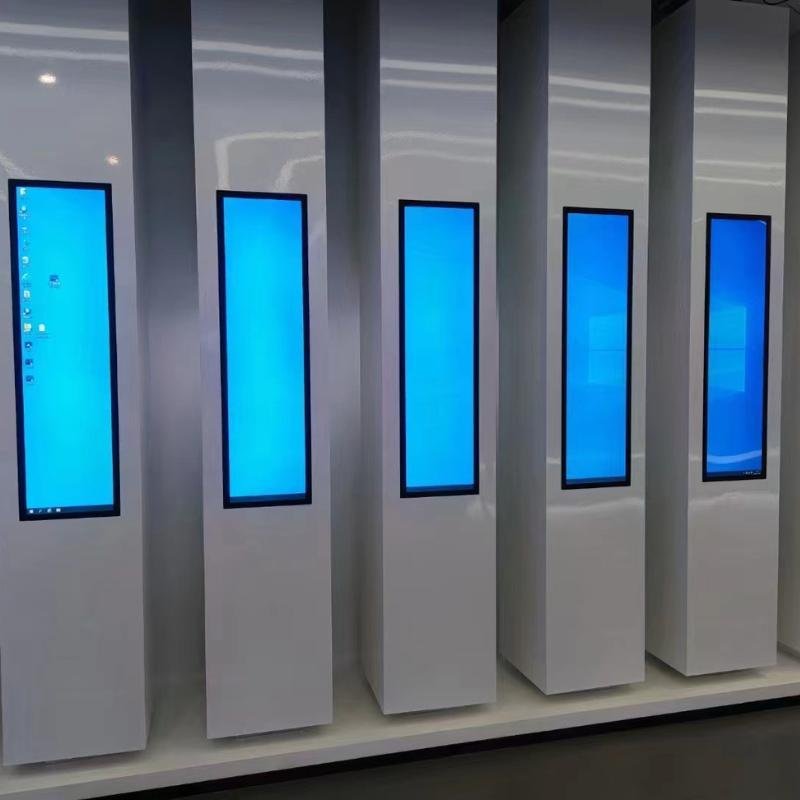
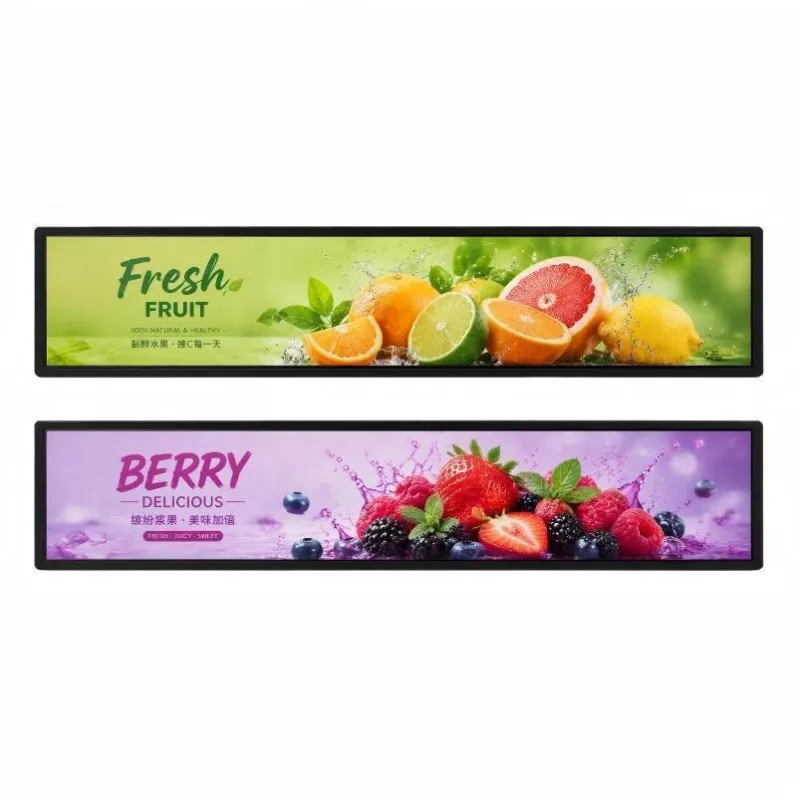
Deploying an advanced Stretched Bar LCD Pricing provides commercial venues with a distinct, form-factor-optimized digital signage solution. In commercial display applications, stretched bar LCD displays (bar-type screens) are widely deployed across retail shelf edges, public transportation, branded showcases, and digital signage due to their distinctive aspect ratios and flexible mounting configurations. However, compared with conventional standard-ratio displays (such as 16:9), certain stretched bar screen products carry a higher price point.
This price difference does not simply stem from their elongated exterior shape. Panel sourcing, structural design, driver solutions, customization complexity, and screen specifications all significantly influence the overall manufacturing and procurement costs of stretched bar displays.
1. Specialized Sizing and Panel Specifications Impact Costs with a Stretched Bar LCD Pricing
Conventional displays utilize standardized sizes and widely produced aspect ratios (such as 16:9 or 16:10), supported by mature, high-volume panel manufacturing ecosystems and readily available standard components.
Stretched bar screens, in contrast, feature non-standard, ultra-wide aspect ratios. Different projects frequently demand varied lengths, heights, and active display areas. Specialized panel specifications face constraints in supply channels, production batch sizes, and matching driver components, naturally resulting in higher manufacturing costs.
Furthermore, factors such as resolution, brightness levels, wide viewing angles, and industrial-grade operating environment requirements directly affect pricing. When evaluating display hardware, buyers should look beyond surface dimensions and comprehensively assess optical performance and practical application requirements.
2. Custom Engineering and Design Drive Up R&D and Manufacturing Costs
A defining advantage of stretched bar screens is their ability to fit into unique spatial constraints and specialized presentation scenarios.
For example, retail shelf headers demand ultra-slim, low-profile displays; transit information boards require specific mounting orientations and shock resistance; while luxury commercial displays call for unique enclosure aesthetics, slim bezels, and tailored I/O port placements.
When a project requires non-standard dimensions, bespoke chassis tooling, custom mounting brackets, or specialized interfaces, it involves dedicated engineering development, prototyping, and validation testing. Each of these stages adds to the final product cost.
Consequently, standard off-the-shelf stretched bar models and highly customized bespoke units exhibit substantial price differences. The more complex the customization, the more critical it is to clearly define technical specifications and budgets during early project planning.
3. Structural Design and Mounting Methods Influence Pricing
Stretched bar screens must not only deliver reliable visual performance, but also seamlessly integrate with physical mounting environments.
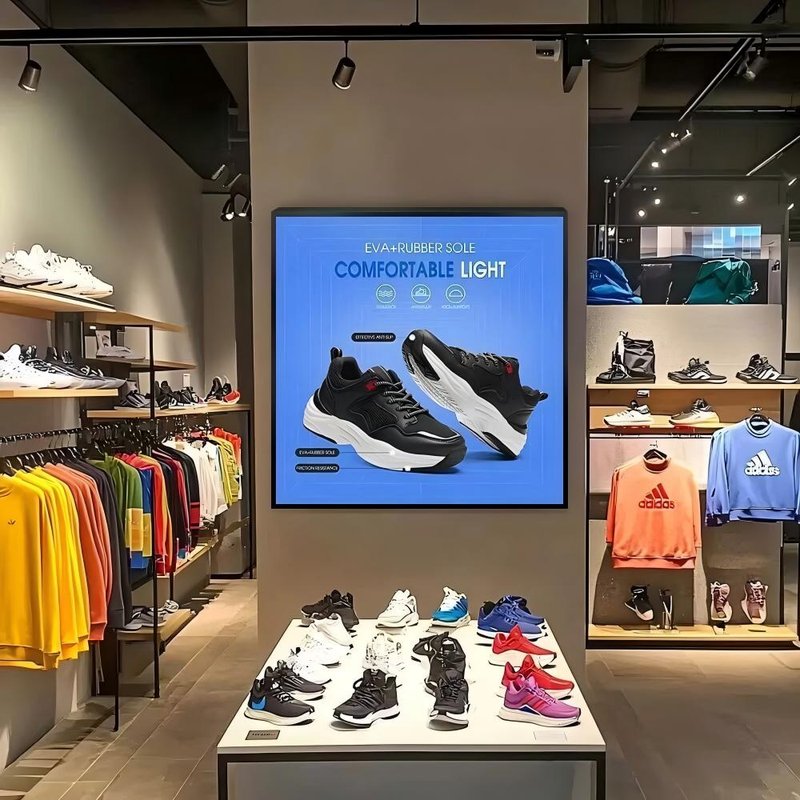
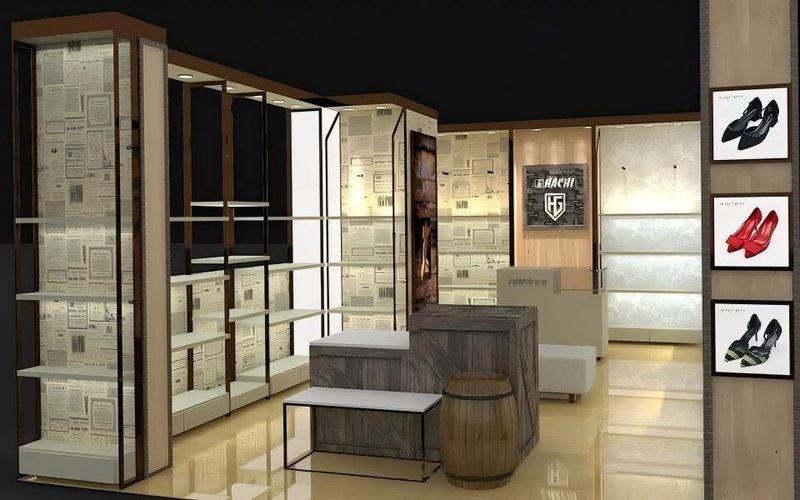
Different applications require wall mounting, recessed flush embedding, shelf-edge clips, or custom bracket assemblies. When displays are integrated into retail shelving, display cases, or automated equipment kiosks, modifications are often required for enclosure design, thermal airflow paths, mechanical fastening points, and internal cable management.
For commercial displays requiring continuous, long-term operation, structural integrity, thermal dissipation engineering, and servicing accessibility demand close attention. These engineering configurations vary across models, and their associated costs reflect specific product designs and deployment conditions.
4. Driving Architecture and Software Capabilities Affect Total Costs
The overall price of a stretched bar display is determined not only by the LCD open-cell or module, but also by the scaler board, media player motherboard, signal interfaces, and control systems.
For straightforward deployments displaying static images or looped standalone video, basic hardware configurations may suffice. However, projects requiring multi-zone split-screen playback, cloud-based remote CMS management, scheduled automated playlists, multi-screen synchronization, or centralized device monitoring require advanced hardware controllers and software ecosystems.
While these digital signage capabilities greatly enhance marketing flexibility, whether they are bundled into the initial product quotation depends on specific hardware choices, software licensing, and project requirements.
5. Production Volumes and Supply Chain Dynamics
Standardized consumer and commercial panels benefit from immense economies of scale that dilute upfront engineering and tooling costs. In contrast, custom-cut or specialized stretched bar displays produced in smaller batch sizes require dedicated production runs, specialized component procurement, and rigorous quality assurance testing, raising unit manufacturing costs.
Order volumes, panel specifications, delivery timelines, and customization depth all directly impact final pricing. Therefore, one should not broadly assume that all stretched bar displays are inherently expensive; pricing must always be evaluated in light of specific technical configurations and order quantities.
6. Evaluating the True Value of Stretched Bar Screens Beyond Initial Cost
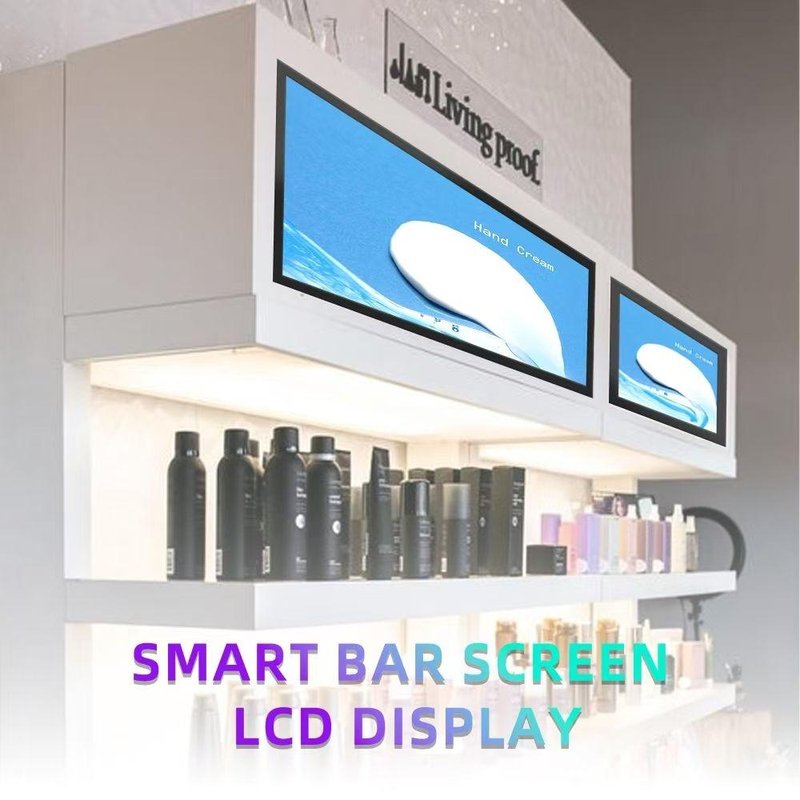
While certain stretched bar displays have higher upfront acquisition costs, conventional screens cannot match their spatial compatibility and visual presentation in space-constrained or unique architectural environments.
For instance, along retail shelf headers, stretched bar displays transform narrow, wasted spaces into dynamic visual merchandising strips; in transit vehicles, they present routes, stations, and passenger announcements without obstructing cabin views; and in commercial interiors, customized aspect ratios blend seamlessly with architectural elements.
When stretched bar screens better satisfy strict installation constraints and digital merchandising goals, procurement evaluations should extend beyond unit hardware price to consider installation feasibility, content management workflows, long-term maintenance, and overall visual marketing impact.
7. ZXTLCD Stretched Bar Display Selection Recommendations
ZXTLCD delivers tailored stretched bar display solutions engineered to match specific spatial conditions, content objectives, and functional requirements. Before finalizing hardware configurations, it is advisable to clarify the following criteria:
Screen Specifications: Determine the active display area dimensions, aspect ratio, resolution, and brightness requirements.
Installation Conditions: Identify mounting positions, fastening methods, spatial clearances, and ambient ventilation/heat dissipation conditions.
Functional Requirements: Confirm requirements for split-screen layouts, cloud CMS remote management, multi-screen synchronization, and scheduled playback.
Procurement Volume: Evaluate the cost differences between off-the-shelf standard models and bespoke customized solutions based on deployment scale.
Maintenance Accessibility: Understand interface layouts, content updating methods, and post-installation servicing workflows.
The higher price of stretched bar screens generally reflects specialized panel engineering, custom tooling, dedicated driver hardware, and advanced software integration, rather than just an elongated physical form. Selecting the right specifications and feature set tailored to your application ensures a cost-effective, high-impact commercial display deployment. In conclusion, adopting a high-performance Stretched Bar LCD Pricing elevates visual merchandising impact, enhances customer engagement, and maximizes commercial display efficiency.
Looking for customized Stretched Bar LCD Pricing solutions, ultra-wide stretched bar LCD displays, or round digital signage hardware? Feel free to contact the ZXTLCD engineering team for technical specifications, product samples, and tailored volume pricing.