Oct 12, 2026News & Insights
Display Screen Aspect Ratios: From 16:9 to Ultra-Wide Stretched Bars and Square Panels
Different display aspect ratios suit different applications, helping commercial spaces optimize installation, content presentation, and visual impact.

Deploying an advanced Display Screen Aspect Ratios provides commercial venues with a distinct, form-factor-optimized digital signage solution. Aspect ratio is a concept familiar to many. It is commonly used to describe the proportional relationship between the width and height of images, videos, and display devices.
In commercial display environments, common numerical combinations such as 16:9, 4:3, and 21:9 represent screen aspect ratios. Different ratio designs not only dictate how visual content is presented, but also determine whether a display device is best suited for landscape orientation, portrait orientation, or specialized space installations.
From the early 4:3 format to mainstream 16:9, and now to an ever-expanding variety of specialized screen proportions, why does the commercial display industry offer such a diverse array of aspect ratios?
The Evolution of Screen Aspect Ratios with a Display Screen Aspect Ratios
While 16:9 displays have become ubiquitous today, the development of screen aspect ratios did not happen overnight.
During the early phases of display technology, television broadcasting drove primary market demand. At that time, constrained by display manufacturing capabilities and broadcast content standards, the 4:3 aspect ratio emerged as the prevailing standard.
With advancements in liquid crystal display (LCD) technology and the widespread adoption of high-definition video standards, 16:9 gradually became the mainstream display format.
Compared to the 4:3 ratio, 16:9 provides a wider horizontal viewing area that aligns better with modern video production and human binocular vision. For applications including cinema, video conferencing, data dashboards, and multimedia playback, 16:9 delivers a distinctly natural and immersive visual experience.
Furthermore, the 16:9 format offers outstanding compatibility across different video formats. When displaying content produced in other aspect ratios, the display can adjust the active viewing area or introduce pillarboxing/letterboxing to preserve original dimensions and avoid visual distortion.
As a result, 16:9 has maintained widespread popularity across televisions, conference room displays, and commercial advertising signage over the long term.
Different Application Scenarios Demand Different Aspect Ratios
Although 16:9 remains the most common aspect ratio, demands across commercial spaces are increasingly diverse. Standard-ratio screens are simply not suited for every environment.
Commercial display hardware must be selected based on installation conditions, content format, and spatial characteristics.
Stretched Bar Displays: Tailored for Narrow Spaces
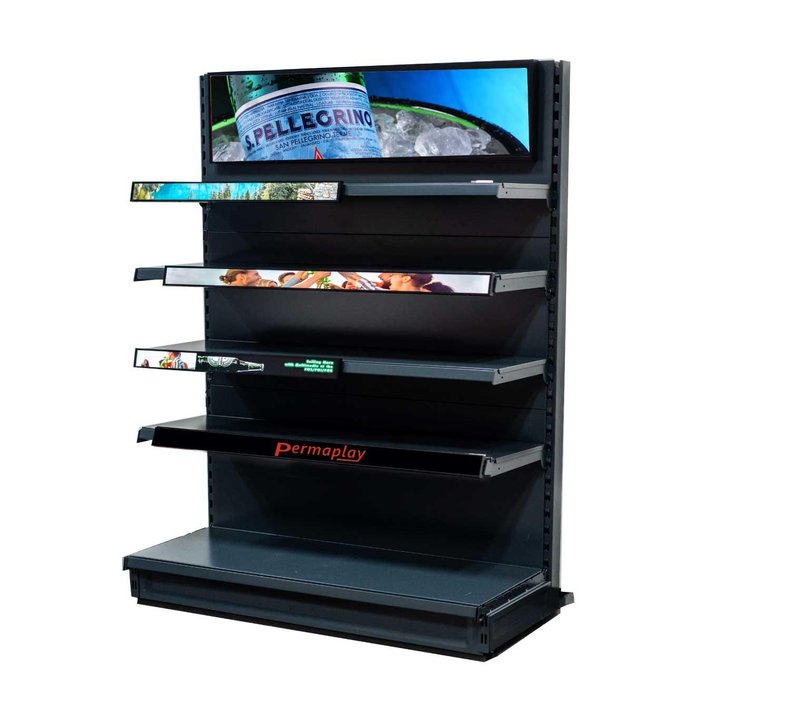
In retail shelving, checkout counters, and narrow corridors, conventional 16:9 displays frequently face physical installation constraints, making it difficult to utilize available space effectively.
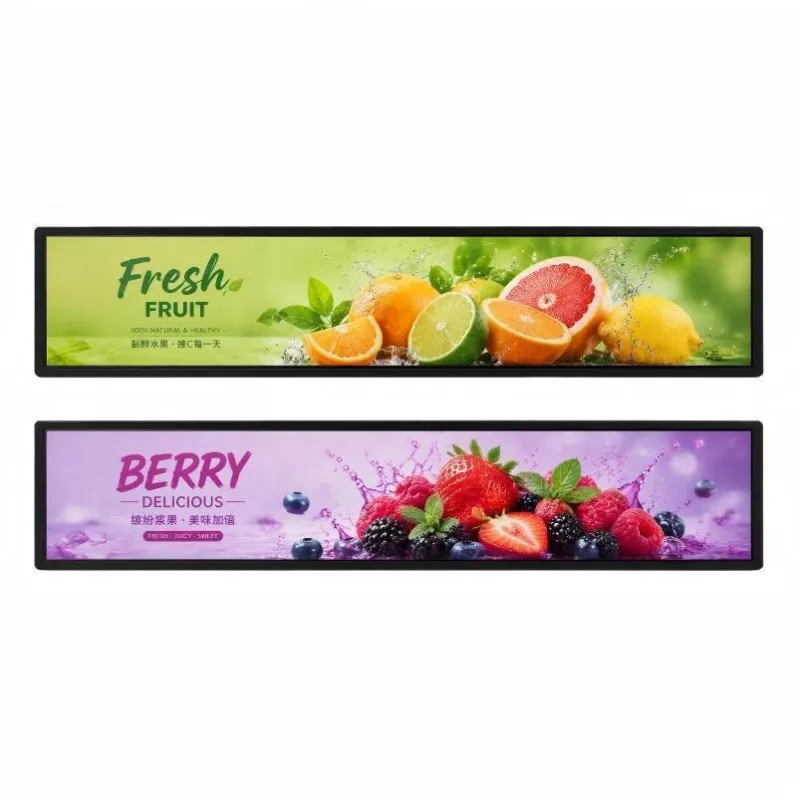
Stretched bar LCD displays feature an elongated, ultra-wide form factor that seamlessly integrates into slim, constrained zones. They are ideal for presenting price tags, product highlights, and brand campaigns while dramatically maximizing spatial efficiency.
Ultra-Wide Displays: Optimal for Expansive Horizontal Areas
In corridors, exhibition halls, and architectural lobbies, ultra-wide displays with aspect ratios such as 21:9 or 32:9 deliver significantly broader panoramic visuals.
Within limited vertical height, these screens dramatically expand horizontal display area. They excel at presenting wide-format panoramic content, promotional messaging, and multi-zone information layouts.
Portrait Displays: Maximizing Vertical Space
In space-constrained locations such as elevator lobbies, retail corners, and entryways, 9:16 portrait displays take full advantage of wall height.
Compared to landscape screens, portrait displays integrate effortlessly into narrow architectural layouts, serving effectively for digital advertising, informational directories, and interactive touch kiosks.

Aligning Screen Ratios with Content and Scenarios
In reality, there is no absolute "golden ratio" for display screens.
While 16:9 accommodates standard general-purpose viewing, specialized formats—such as stretched bar displays, ultra-wide screens, and portrait monitors—are tailored solutions engineered for unique environments.
Commercial environments are rarely designed around rigid display specifications.
Therefore, display devices must adapt to real-world architectural and operational conditions.
For example:
Corporate meeting rooms prioritize image clarity and broad content compatibility, making 16:9 the dominant choice;
Commercial retail spaces require flexible aspect ratios that integrate seamlessly with shelving units, display counters, and boutique wall spaces;
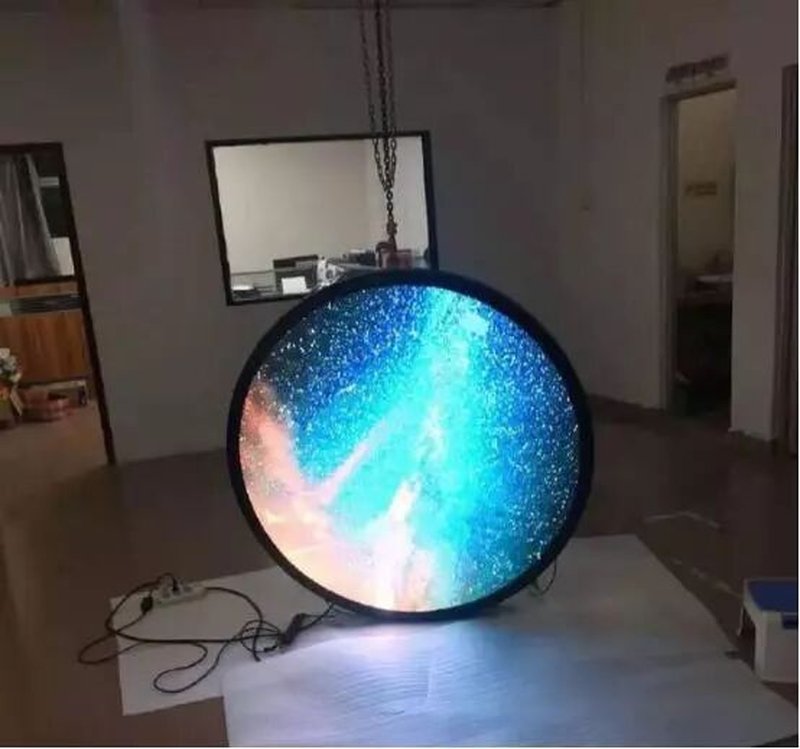
Exhibition centers, transit hubs, and large public facilities often require custom-ratio displays with high visual impact.
Split-Screen Technology Enhances Display Versatility
While aspect ratios shape how visuals are delivered, they do not inherently restrict content presentation.
Through intelligent split-screen capabilities, a single display can be partitioned into multiple dedicated zones to present diverse media simultaneously. For instance, commercial advertising screens can run dynamic video, promotional graphics, and scrolling text tickers concurrently, significantly enhancing screen utility.
Split-screen technology empowers operators to flexibly customize visual layouts based on dynamic operational needs, ensuring distinct types of information are communicated effectively on a single screen.
Conclusion
A screen's aspect ratio is far more than an industrial design choice; it is intrinsically linked to content strategy, installation environments, and operational goals.
No single aspect ratio fits every scenario. Selecting the ideal display ratio requires a balanced assessment of viewing distance, spatial architecture, content types, and intended communication objectives.
For commercial display solutions, true value lies in matching the right aspect ratio to the right application—unlocking optimal visual performance and delivering efficient, high-impact information delivery across diverse spaces. In conclusion, adopting a high-performance Display Screen Aspect Ratios elevates visual merchandising impact, enhances customer engagement, and maximizes commercial display efficiency.
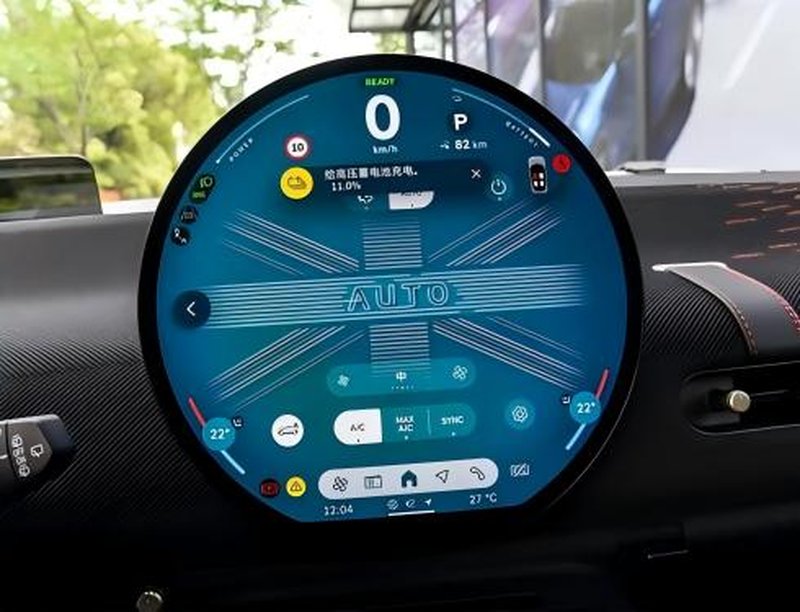
Looking for customized Display Screen Aspect Ratios solutions, ultra-wide stretched bar LCD displays, or round digital signage hardware? Feel free to contact the ZXTLCD engineering team for technical specifications, product samples, and tailored volume pricing.