Oct 12, 2026Buying Guides
Custom Round Display Screen Guide: Dimensions, Brightness, Interfaces, and Hardware Fit
Custom round display screens combine size, optical, structural, and touch customization to deliver unique solutions for industrial, smart, and commercial applications.
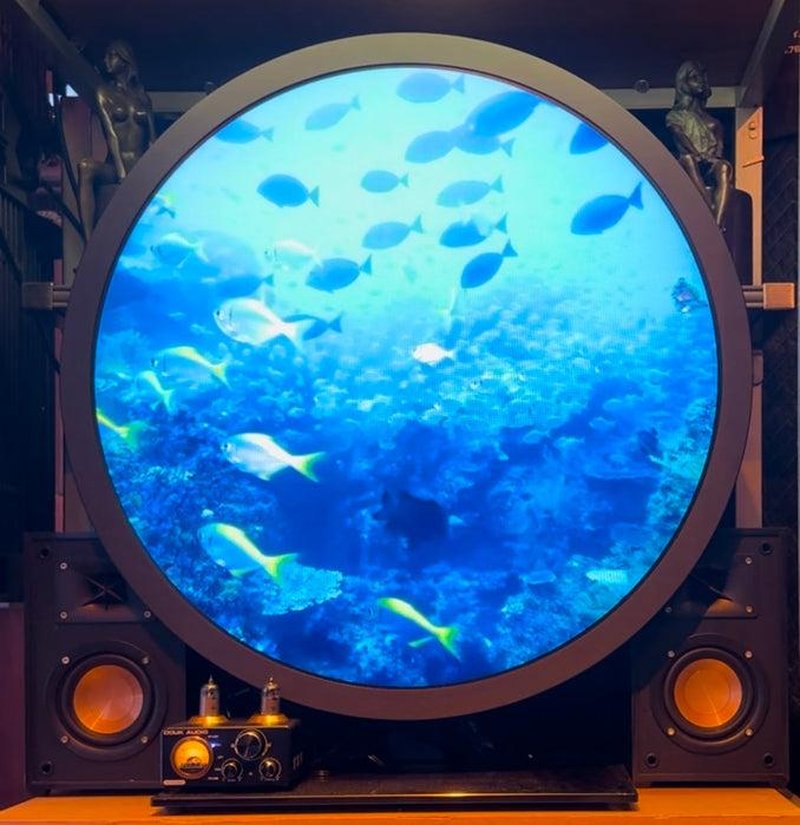
Deploying an advanced Custom Round Display Screen Guide provides commercial venues with a distinct, form-factor-optimized digital signage solution. With the rapid evolution of smart hardware and personalized industrial terminals, electronic displays are no longer confined to traditional rectangular geometries. In products emphasizing aesthetic industrial design and spatial harmony, round display screens have emerged as an innovative, compelling display architecture.
Compared with standard rectangular LCD panels, round display screens integrate seamlessly into specialized enclosure contours, bestowing devices with clean, refined styling while reliably satisfying functional demands for status monitoring, data visualization, and human-machine interaction (HMI). Today, circular displays are deployed across intelligent instrumentation, industrial HMI panels, commercial retail digital signage, smart home controls, and custom interactive kiosks.
However, developing a round display is far more complex than merely trimming down a screen's outer edge. Because active display areas, driving ICs, mechanical housings, and touch sensor architectures must all be re-engineered, customizing a circular display requires a holistic evaluation of the operating environment and application requirements.
What Is a Round Display Screen? with a Custom Round Display Screen Guide
A round display screen is an engineered display module whose active viewing area is circular or custom-contoured to match product housing requirements. Breaking free from standardized rectangular panel boundaries, it empowers designers with exceptional freedom in exterior industrial styling.
In commercial and industrial applications, round display architectures primarily encompass full-active-area circular LCD/OLED modules, circular touch display assemblies, and custom-shaped display units with specialized bezels.
True full-circle display screens are typically chosen for high-end products demanding seamless aesthetics, such as intelligent automotive/marine dials, rotary control knobs, and luxury retail showcases. These products require cohesive engineering across the circular LCD cell, curved backlight unit (BLU), and chassis enclosure.
Alternatively, for products that desire a circular aesthetic within constrained budgets or existing mechanical layouts, engineering teams can achieve a circular visual profile using circular cover glass with black matrix masking, specialized circular bezels, or round chassis cutouts over square display panels. This approach offers significant flexibility in prototyping speed and development cost control.
Key Factors to Consider When Customizing a Round Display Screen
When specifying a custom round display solution, the first priority is defining the screen diameter and available mechanical mounting envelope. Different hardware architectures impose distinct constraints regarding outer diameter, module thickness, FPC ribbon cable routing, connector locations, and mounting bracket designs.
For instance, an industrial instrumentation display prioritizes long-term operational stability, vibration resistance, and rugged mounting; conversely, a commercial retail display emphasizes optical clarity, slim bezels, and sophisticated industrial styling.
During initial project scoping, project teams should clearly define:
Active display diameter and dimensional tolerances;
Internal enclosure clearances and spatial envelope;
Mechanical mounting and bracket fastening methods;
Operating environmental conditions (temperature, humidity, dust, sunlight);
Touch interaction requirements (capacitive touch, glove operation, water rejection).
Finalizing these parameters early provides a solid foundation for optimal display module design.
Optical Performance: The Core of a Quality Round Display
Beyond physical mechanics, optical performance is paramount when selecting a round display screen.
Resolution determines image sharpness and detail. If the screen primarily presents numerical readings, dial needles, or simple system icons, a standard resolution may suffice. If the device displays high-definition promotional videos, rich 3D graphics, or detailed UI animations, higher pixel density (PPI) is essential.
Panel brightness must be tailored to ambient illumination. Indoor devices emphasize color fidelity, contrast, and eye comfort (typically 250 to 500 nits). Conversely, semi-outdoor or high-ambient-light environments demand high-brightness displays (800 to 1,500+ nits) to guarantee sunlight readability without washed-out visuals.
Viewing angles also profoundly affect user experience. When a device is viewed by multiple observers or installed at varying sightline angles, wide-viewing-angle IPS technology ensures color accuracy and contrast consistency from every vantage point.
Engineering Challenges in Custom Round Display Development
While standard rectangular LCD panels benefit from highly automated mass-production lines, round displays represent non-standard display manufacturing requiring dedicated engineering for each specific diameter.
Circular LCD module engineering is a critical technical phase. Because pixel matrices and gate/source driving lines must adapt to curved boundaries, engineers must meticulously route circuit traces, configure gate drivers (e.g., Gate-in-Panel / GIP technology), and design circular backlight light-guide plates (LGPs) to ensure uniform brightness across the entire perimeter without dark edges or light leakage.
Driver architecture and interface compatibility must also be locked down early. Different circular panel sizes utilize various interfaces—such as MIPI-DSI, RGB, LVDS, SPI, or HDMI—requiring seamless pairing with host processor boards. Furthermore, if touch capability is required, circular projected capacitive (PCAP) sensor routing, cover glass optical bonding, and touch controller firmware tuning must be integrated.
For industrial-grade hardware, operating durability across wide temperature ranges (-20°C to +70°C or wider), IP-rated environmental sealing, and continuous 24/7 reliability must be verified through rigorous environmental qualification testing.
Versatile Application Scenarios for Round Display Screens
Industrial Equipment & Instrumentation: Rotary control panels, diagnostic gauges, flow meters, and industrial HMI terminals utilize circular display interfaces to deliver intuitive data readouts that harmonize with traditional round cutouts.
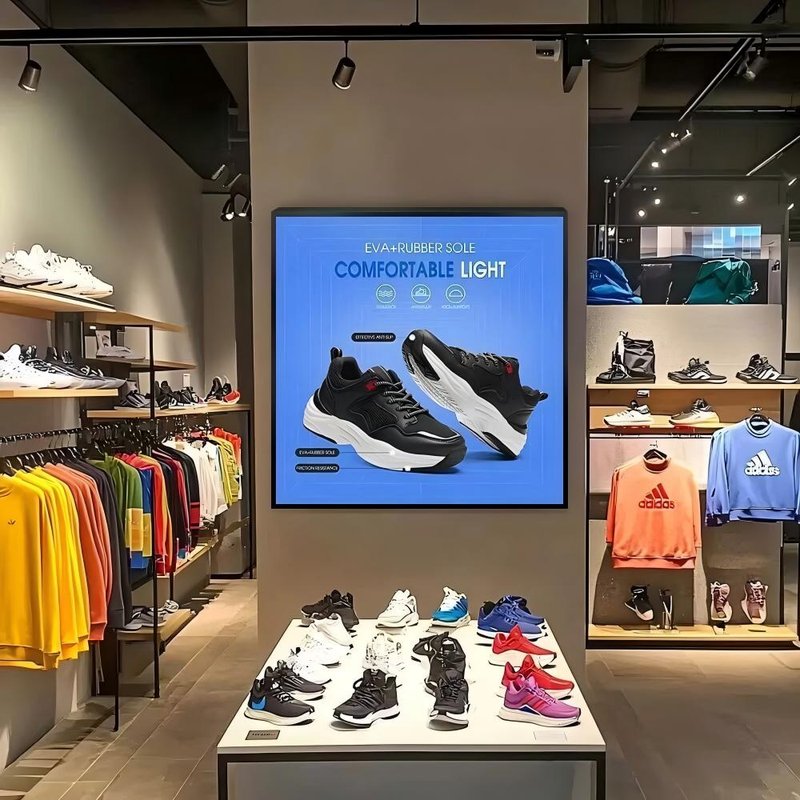
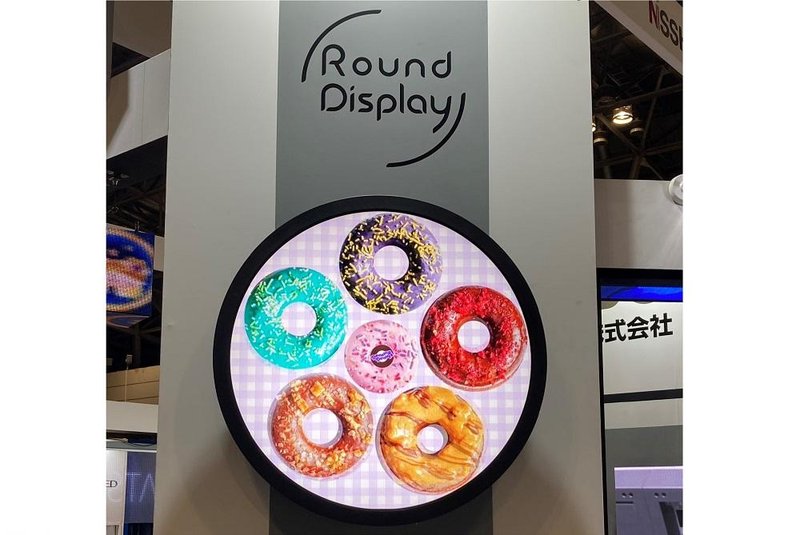
Commercial Retail & Merchandising: High-end retail showcases, interactive cosmetic displays, and creative digital signage kiosks leverage circular visual geometry to captivate customer attention and elevate brand prestige.
Smart Home & IoT Terminals: Smart thermostats, smart oven rotary displays, air quality monitors, and home automation control hubs integrate circular screens to achieve sleek, minimalist product design.
How to Select the Ideal Round Display Manufacturing Partner
When commissioning a custom round display solution, manufacturers should prioritize real-world product positioning over pure aesthetic novelty.
If the product requires continuous, mission-critical operation, hardware stability, supply chain longevity, and maintenance serviceability must take precedence. If the display is destined for brand marketing or consumer electronics, optical impact, ultra-slim bezels, and responsive touch interaction should be prioritized.
Engaging with an experienced display solution manufacturer at the earliest stages of industrial design allows teams to align panel diameter, interface types, touch bonding methods, and chassis mechanics. Finalizing specifications upfront drastically reduces re-tooling expenses and accelerates time to market.
Future Trends in Round Display Technology
Driven by the demand for personalized smart hardware and digital transformation, display technology is rapidly advancing toward customized, multi-form-factor solutions.
With their striking visual aesthetics and versatile integration capabilities, round display screens will continue to expand across industrial automation, smart lifestyle devices, commercial visual merchandising, and innovative interactive terminals.
For hardware manufacturers, investing in the right custom round display solution not only enhances industrial design competitiveness, but also elevates the end-user interactive experience.
FAQ: Frequently Asked Questions About Round Display Customization
Q1: Can round display screens support touch functionality?
Yes. Round displays can be integrated with projected capacitive (PCAP) touch sensors, supporting multi-touch gestures. The touch sensor layout, circular cover lens, and controller firmware are custom-engineered to match the active screen diameter and operational environment.
Q2: What screen sizes are available for round displays?
Round displays can be customized across diverse diameters—from compact 1.2-inch to 5-inch smart dials, up to large commercial displays measuring 23.6 inches, 33.4 inches, or larger. Optimal size depends on viewing distance, enclosure dimensions, and application requirements.
Q3: Are round displays suitable for industrial machinery?
Yes. Industrial-grade round displays are engineered to withstand harsh operating conditions, offering wide operating temperature ranges, high electromagnetic immunity, rugged mounting frames, and long product lifecycles.
Q4: What technical specifications are required to begin a round display customization project?
Project kickoff typically requires defining the active display diameter, resolution, brightness target, interface type (MIPI, LVDS, HDMI, etc.), operating environment/temperatures, touch requirements, and mechanical enclosure envelope. Providing these parameters enables engineers to deliver an accurate, cost-effective proposal. In conclusion, adopting a high-performance Custom Round Display Screen Guide elevates visual merchandising impact, enhances customer engagement, and maximizes commercial display efficiency.
Looking for customized Custom Round Display Screen Guide solutions, ultra-wide stretched bar LCD displays, or round digital signage hardware? Feel free to contact the ZXTLCD engineering team for technical specifications, product samples, and tailored volume pricing.