Oct 12, 2026News & Insights
The Circular LCD Display Design Trend: Why Smart Terminals Are Moving Beyond Rectangles
Round LCD displays are gaining popularity with unique designs, flexible customization, and wide applications in smart hardware, industrial equipment, and commercial displays.
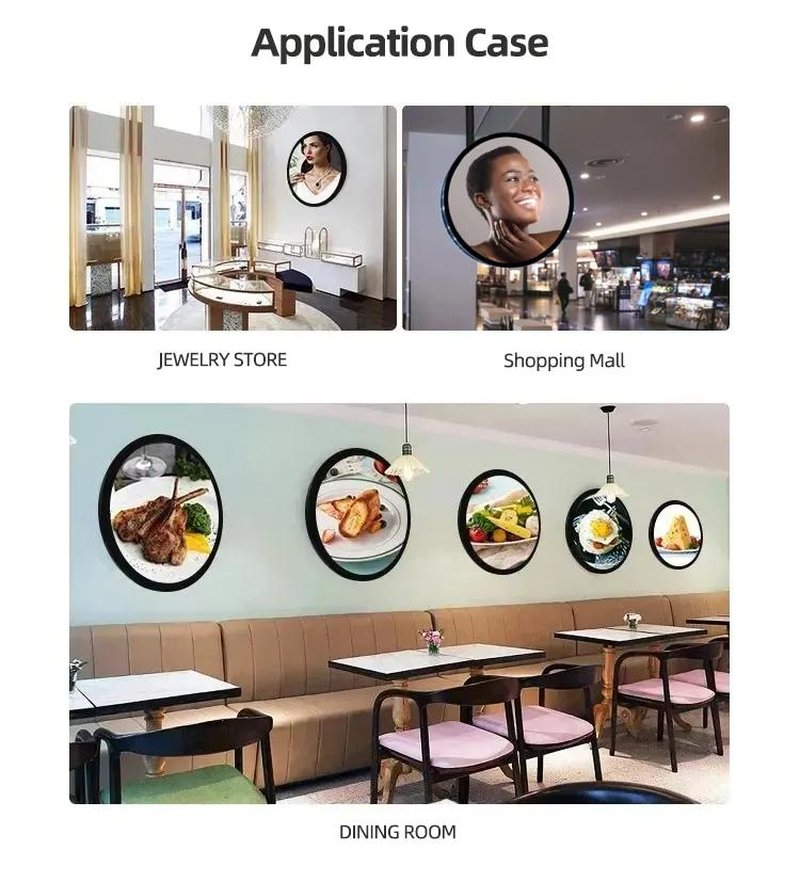
Deploying an advanced Circular LCD Display Design Trend provides commercial venues with a distinct, form-factor-optimized digital signage solution. For decades, rectangular display screens have dominated the global electronics landscape. From smartphones and computer monitors to industrial automation panels and commercial advertising kiosks, standardized rectangular screens became the default industry choice thanks to mature manufacturing processes and broad interchangeability.
However, as smart hardware, commercial retail displays, and industrial equipment increasingly pursue distinctive product differentiation, display form factors are experiencing a profound transformation. With their eye-catching circular silhouette, flexible mechanical adaptability, and seamless structural integration, round LCD screens are being adopted across smart devices, digital instrumentation, branded retail showcases, and custom interactive kiosks.
What Is a Round LCD Screen? with a Circular LCD Display Design Trend
A round LCD screen (circular LCD display) is a liquid crystal display module whose active viewing area is engineered in a circular geometry. The defining distinction between a round LCD and a conventional panel lies in its physical form factor and internal circuit architecture.
While standard LCD panels follow standardized rectangular aspect ratios, a round LCD requires a complete redesign of the active display area, backlight unit (BLU), driving circuitry, and mounting enclosure.
A true round LCD is not created by simply cutting the corners off a rectangular screen. Because an LCD module incorporates patterned glass substrates, polarizers, gate/source routing traces, driver ICs, and light-guide plates, the circular form factor requires specialized display engineering from the ground up.
Depending on operational requirements, round LCD screens can be configured with varying diameters, resolutions, and optical parameters. They can also integrate capacitive touch sensors, seamlessly uniting dynamic information visualization with intuitive human-machine interaction.
Key Features and Advantages of Round LCD Screens
1. Distinctive Exterior Styling Enhances Product Brand Recognition
Compared with conventional rectangular screens, the defining feature of a round LCD is its visually unique circular profile.
In commercial marketing and consumer electronics, device appearance directly drives a user's first impression. Incorporating a circular display design eliminates the boxy visual monotony of standard screens, imparting a sleek, designer-grade aesthetic to the host equipment.
In retail visual merchandising, a round screen acts as a natural architectural focal point; in smart hardware terminals, it establishes a bold, unmistakable visual identity.
2. Seamless Integration into Non-Rectangular Enclosures
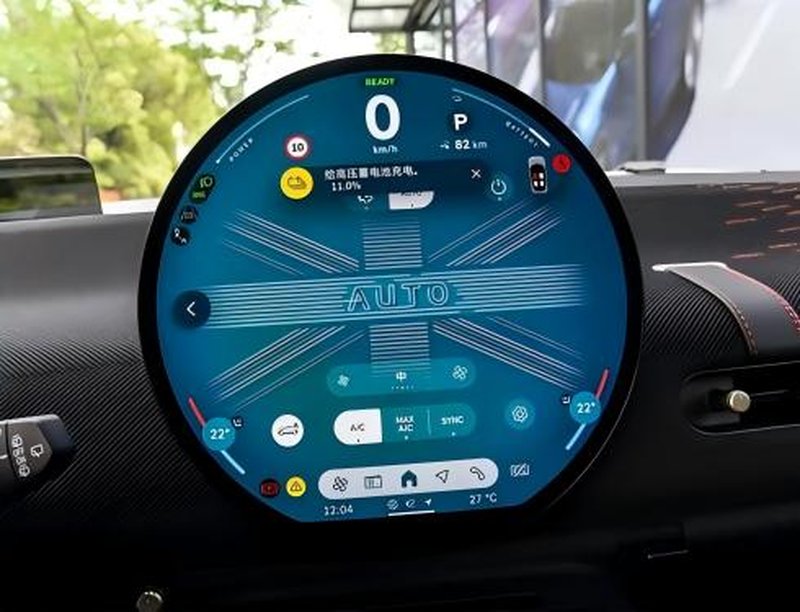
Many modern devices feature organic, curved, or cylindrical housings—such as automotive dials, rotary control knobs, smart thermostats, and artistic exhibition kiosks.
Round LCD screens naturally harmonize with circular device contours, creating perfect visual alignment between the display and the outer enclosure.
For industrial designers and product engineers, circular displays eliminate the constraints of standard rectangular panels, unlocking expansive freedom for industrial design innovation.
3. Comprehensive Information Display and Touch Interaction
Modern round LCD screens serve far beyond simple static graphics; paired with advanced touch technologies, they enable rich, intuitive user interaction.
Common implementations include:
Industrial equipment telemetry and diagnostic readouts;
Rotary HMI control interfaces for smart appliances;
Digital catalog browsing and product spec lookups;
Interactive brand merchandising and multimedia showcases.
By uniting visual output with responsive multi-touch input, round displays deliver a clean, modern user experience.
Why Are More and More Devices Adopting Circular Display Designs?
1. Product Differentiation in Saturated Markets
As global product competition intensifies, manufacturers must deliver not only robust functional performance, but also compelling exterior differentiation.
While standard rectangular screens remain cost-effective and mature, they struggle to communicate innovation or visual luxury in premium products.
Circular display designs deliver immediate visual impact, setting products apart on retail shelves and exhibition floors. In smart IoT hardware, premium consumer electronics, and high-end commercial displays, unique display form factors have become a proven strategy to elevate perceived product value.
2. Commercial Spaces Demand Greater Visual Magnetism
Shoppers in retail malls, flagship boutiques, and corporate exhibition halls encounter countless advertising screens every day.
Standard rectangular displays blend easily into ambient architectural backgrounds, whereas circular displays instantly grab consumer attention due to their unfamiliar, artistic geometry.
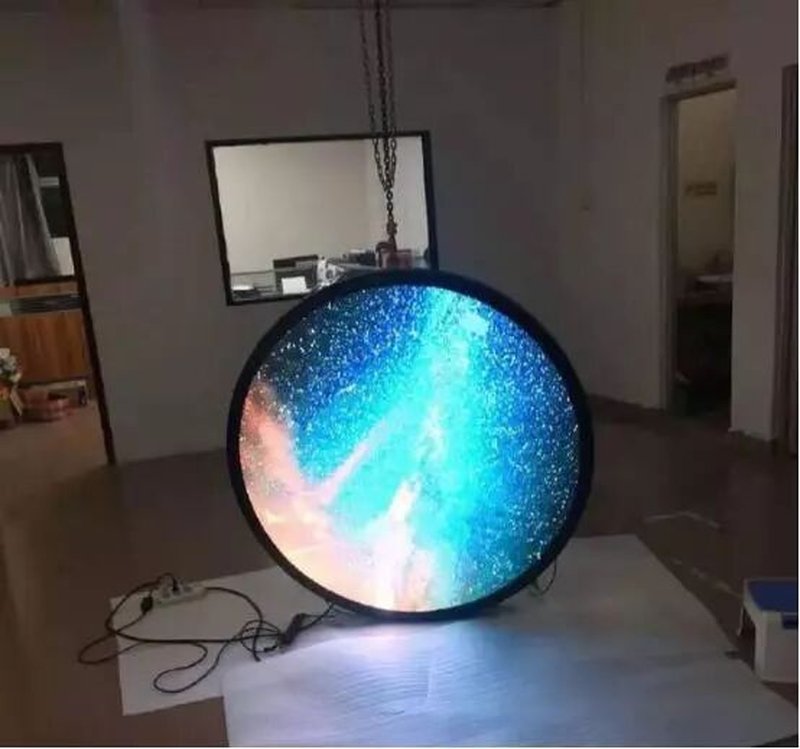
By broadcasting high-definition brand videos, 3D product animations, and dynamic promotional content, round displays help brands craft captivating, memorable merchandising displays.
Consequently, circular digital signage and round advertising screens are seeing surging demand across commercial visual merchandising.
3. Evolution of Smart Hardware and Diverse HMI Needs
With the rise of smart home automation, industrial robotics, and intelligent IoT terminals, human-machine interface requirements are diversifying rapidly:
Smart home controllers demand sleek, minimalist rotary interfaces;
Industrial machinery requires clear, glanceable operational gauges;
Commercial interactive kiosks demand engaging, tactile experiences.
Circular display architectures can be custom-tailored to match unique enclosure shapes and specific functional workflows, offering unparalleled design adaptability.

Primary Application Sectors for Round LCD Screens
Industrial Automation & Machinery: Round LCD screens serve as digital instrument clusters, pressure gauges, flow meters, and rotary control knobs—replacing legacy mechanical needle dials with versatile, full-color digital telemetry.
Smart Home & Connected IoT: Smart thermostats, induction cooktop knobs, smart oven controllers, and home automation hubs leverage circular displays to achieve modern, minimalist luxury.
Commercial Retail & Merchandising: Luxury watch display cases, cosmetics counters, jewelry showcases, and shopping mall kiosks utilize round screens to highlight hero products and elevate brand perception.
Creative Interactive Exhibits: Museum installations, science center exhibits, themed hospitality venues, and bespoke interactive art kiosks adopt round displays to deliver memorable, non-standard visual experiences.
Key Considerations When Specifying a Round LCD Screen
While round LCD screens offer tremendous aesthetic and functional value, hardware selection must align with real-world project requirements:
Dimensions & Mechanical Clearance: Verify the active diameter, bezel step, module thickness, and internal enclosure space to ensure flawless structural fit.
Optical Parameters & Environmental Ratings: Select resolution, luminance (nits), contrast ratio, and wide-viewing-angle IPS technology based on ambient lighting and operating temperatures.
Touch Integration: Determine early whether capacitive touch is required, factoring in cover glass thickness, optical bonding, and surface treatments (anti-glare, anti-fingerprint).
Controller Interfaces & Firmware: Verify signal interfaces (MIPI, LVDS, RGB, HDMI), circular UI coordinate mapping, and software compatibility with the host mainboard.
FAQ: Frequently Asked Questions About Round LCD Screens
Q1: What is the core difference between a round LCD screen and a standard rectangular LCD?
The fundamental difference lies in active area geometry and custom engineering. Standard LCDs utilize off-the-shelf rectangular dimensions, whereas round LCDs require specialized circular module design, custom gate/source routing, circular backlights, and dedicated mounting mechanics.
Q2: Can a round LCD screen function as a touchscreen?
Yes. Round LCD screens can be integrated with projected capacitive (PCAP) multi-touch panels, enabling smooth tapping, swiping, and rotary gesture navigation for smart devices and interactive kiosks.
Q3: Which industries benefit most from round LCD screens?
Round LCD screens are extensively utilized in industrial instrumentation, smart home appliances, luxury retail visual merchandising, medical devices, automotive/marine gauges, and customized commercial hardware.
Q4: Can round LCD screens be customized in different sizes?
Yes. Round LCD screens can be custom-manufactured across a wide spectrum of diameters, resolutions, interfaces, and mechanical bracket configurations tailored to specific product engineering requirements. In conclusion, adopting a high-performance Circular LCD Display Design Trend elevates visual merchandising impact, enhances customer engagement, and maximizes commercial display efficiency.
Looking for customized Circular LCD Display Design Trend solutions, ultra-wide stretched bar LCD displays, or round digital signage hardware? Feel free to contact the ZXTLCD engineering team for technical specifications, product samples, and tailored volume pricing.